Literature 101: What is Autobiography?

You probably have heard of the term “autobiography” somewhere, like in your English class. There are definitely many things that can be connected to this word. Books, for example, are being categorized as an autobiography with either pictures of a person on its cover or in parts of the book. But what does autobiography really mean in literature?

Definition of Autobiography

Autobiography refers to the writing about one’s life. Although this type of literature is personally written by the person whose experiences are being put into writing, there are also other cases where another individual is writing about the life of a particular person on his behalf.

Overview of Autobiography

The term “autobiography” was first utilized disdainfully in 17th century by William Taylor. The word was used during the 18th century by Robert Southey in its present tense.  Even though it was only being identified at the initial part of the 19th century, autobiographical writing using the first-person already emerged ages ago. Autobiography, therefore, extracts parts of the writer’s life form the time of writing. There are tendencies that it is primarily based only on the memories of the writer.

Relationship of Nonfiction and Autobiography

Nonfiction is a literary genre that features works that contain accurate, factual, and clear information, activities, and individuals. However, there are times that nonfictional works are allowed to be shown either in subjective or objective manner. Nonfiction is typically among the essential parts of narrative writing.

The relationship between nonfiction and autobiography is that the latter is a under the wing of the former. In other words, autobiography is a subgenre of nonfiction. The tale of an individual’s life is being narrated by a particular narrator, depending on the writing style of the author. It is expected that all claims and parts of the story is truthful and real, because it would really become an issue if there are accounts in the writings that aren’t factual.

You probably might think that these two great genres of literature are boring and plain because they are spitting facts from top to bottom. But, that isn’t the real deal. Literary nonfiction, where autobiography is categorized, is a great avenue that houses works that have the same goal with fiction — which is to express and fascinate. The only contrasting aspect to fiction is that literary nonfiction’s elements are factual and not nonexistent.

Characteristic of Autobiography

The account of one’s life written by that particular individual is, again, the common definition of autobiography. Therefore, the common point of view used by authors of this genre is first person. The narrator is an essential part of the story, either he the protagonist or supporting character, which aims to tell the tale. The pronouns that the narrator uses are I, my, mine, and such.

Types of Autobiographical Writing

Although it the definition of the subject is already understood by many, it is still considered a vague category. Thus, here are some of the types of autobiography that you should know:

  • Religious – also called as spiritual autobiography, it refers to the collection of events in an individual’s life that mainly refers to his relationship with God.
  • Intellectual – the purpose of this autobiography is for you to reflect on your experiences and write about the most important moments of your life that made you achieve success and a better person.
  • Fictionalized –refers to the autobiographies where the authors tells his truth but there are parts that were given a touch of fiction to safeguard the innocent, close gaps, and reorganize events.
  • Thematic – pertains to the type of writing that doesn’t adhere to the facts alone but aims to blend the factual data to show a fixed POV.

Examples of Autobiography

In this day and age, there are already a lot of autobiographies that that are already published. Some of them were written in the classical period while others are written in the contemporary era. What is certain is that they tell raw and substantial stories of amazing people. Here are some of the best examples of autobiography:

  • I Know Why the Caged Bird Sings by Maya Angelou – contains the story of the early life of the remarkable poet Maya Angelou
  • Donut Hole: A Marine’s Real-Life Battles in Vietnam During 1967 and 68 Marines, 1st Force Logistical Command Clutch Platoon by RC LeBeau – the book that features RC Le Beau’s life and war stories
  • The Story of My Life by Helen Keller – it highlights the early years of Helen Keller and her moments with Anne Sullivan
  • One Caregiver’s Journey by Eleanor Gacetta – showcase the experience of the author in becoming a caregiver for her mother


Understanding the Importance of Settings

Many authors pay the most focus on the development of their characters and plot when building their stories. When readers consume these stories, they pay more attention to the characters and the plot – as if these are the only elements of a story or the only ones that matter. What about the setting? 

It is no secret that readers love the characters and the plot and are blown away by the scenes and dialogues between characters. However, they forget all about the setting, treating it as if it never ‘exists’ in the story. They never know that a story, whether character-driven or plot-driven, will never stand ground without a solid setting. 

The setting is one of the five essential elements of a story. (The other four parts are the plot, characters, conflict, and theme. Setting establishes the mood, reveals the characters and conflict, gives clues to a story’s theme, and provides context. It gives us the ‘where’ and the ‘when’ (because a story’s setting also refers to time elements). If it is to be personified, it will exist mainly in the background as a recurring character – and an important one too. 

A story’s setting might be more important than what many readers thought. In many stories, the setting often gives meaning and even more information surrounding a character’s emotions, physical movement, or state of mind. Settings will usually match the characters and the type of problem they, particularly a detective of a protagonist, are trying to solve. A setting can be anywhere, real or made-up. 

Discerning and well-read readers will know how essential settings are in stories and how they help beef up the narrative. The murder mystery novel Mystery at Pima Point by JB Clemmens will serve this example. 

The story revolves around the disappearance of a Ph.D. student and entrepreneur, who was the fiancé of the protagonist’s nephew. The bride-to-be, Christa, disappeared from a cave above the Pima Point Resort (“in the Phoenix area”) where the protagonist, NYPD Homicide Lieutenant Eli James, was vacationing. 

As with several fiction stories, the characters, events, and stories are fictitious, but the resort – the setting – is based on a real one. JB Clemmens did well in this department; she gave Mystery at Pima Point a familiar setting. When deciding on a setting for your story, it is easy to write about places you are familiar with, have visited in person, experience the culture and atmosphere, and talk to the residents. The author even began the story with a brief description of the day’s weather, “Despite the brutal afternoon sun in the Phoenix area…” 

Later in the story, the author briefly described the cave Lieutenant James was investigating with his nephew, Drew. She wrote, “Most of the caves he’d even been in were damp inside, but not this one. Arizona’s lack of groundwater and the hot, dry sun kept this cave almost moisture-free. There were no muddy footprints to follow.” 

Perhaps for the benefit of readers who love food, the setting is also spiced with the mentions of foods that reflect the southwest’s Hispanic culture. 

Mystery at Pima Point took place in one of the states that comprise the Southwestern United States. The said region is dotted with endless networks of caves and a myriad of abandoned mines. Christa disappeared from a cave above the resort where Lieutenant James was vacationing. 

It should be noted that the region has been the site of countless mysterious disappearances. One such case involves the eerily bizarre vanishing of an experienced hiker Kenny Veach in November 2014 in Nevada. Despite searches by family, friends, and the state’s search and rescue team, no signs of Kenny Veach were ever found except for his cellphone, which was discovered while investigators searched the area. In Mystery at Pima Point, Christa’s camera was found on the ground in the cave. 

Settings also reveal the character. In the novel, the cave showed Lieutenant James’ character as a homicide investigator. JB Clemmens wrote:

He looked at the rock carvings and saw nothing unusual at first. Then he noticed that most of them had faint outlines due to weathering. But there was one on the left of an Indian pointing up. The lines were deep-set and probably much more recent than the others. 

“I’m no archeologist, but doesn’t this one figure appear newer than the rest.” He asked Drew. 

For discerning readers, it is difficult to dismiss the importance of settings. A story’s setting is as important as the characters and the plot. All elements of a story go together as they all help tell the story. A setting is not just ‘where’ and ‘when’ but is also key to the plot and conflict. 

The Christian Faith: A Journey of Nurturing and Growing

“I am the vine. You are the branches; he who abides in Me and I in him, he bears much fruit, for apart from Me you can do nothing.” – John 15:6

For many of us Christians, our faith is what sustains us every day. It is also something that’s always been a part of our life journey. From our first prayer to the first Bible lesson in school, our Christian life is one of nurturing and continuous growth. We start and end our day with an act of faith, and that is prayer. As we journey into life, our relationship with God also takes a journey. We graduate from simple prayers of devotion to more personal petitions and expressions of gratitude and devotion. And in all these, God is in the center of our growth. But what exactly does it mean to grow as a Christian, and what are the steps of growth that ensure a healthy and meaningful relationship with God?

A few days ago, I came across a site where an article inspired by a book that talks about steps of growth as a Christian by Marianna Albritton. The book is entitled Come Climb Toward God: Are You Hungry for God by Albritton, and it was published just last year. In the book inspired by the book, the writer mentions four growth areas, including prayer, the Bible, fellowship, and practicing goodness. This inspiring read made me think of my own journey as a Christian. Below is the shortlist of steps ( I added one which I think everyone can also relate.) from the said article with my own reflections on each item. I hope you will find inspiration in this article as it inspired me to renew my faith and personal growth with God.

Recognize God’s grace in your life

The first is my addition to the list. Personally, I think everything starts with acknowledgment. We must first be able to hear God’s voice in our lives and accept that his presence is essential in our journey. This is the first step of faith and growth as a Christian. By believing that God is with us, we also make ourselves ready for his design and purpose. Otherwise, we cannot move forward to the next steps of growth based on Albritton’s work. Accepting Christ in our life is a major decision and one that must be made with sincerity.

Have a thorough study of the Bible

The Bible is essential to the life and journey of every Christian. It is the foundation of our faith and contains the Word of God and His Wisdom. Every Christian is encouraged to not only embrace the Bible and its contents but to live by the gospels and the guidance of the Holy Scriptures. The Bible is a comprehensive guide that is meant to be reviewed constantly and thoroughly. Aside from serving as a guidebook, the Bible is actually full of inspiring tales and stories. Studying the Bible need not be a ponderous tome. Do enjoy it, and before you know, you will come to seek its content more often.

Make it a habit to pray every day

Perhaps the simplest and most appropriate definition of prayer is talking to God. Talking to God bring you closer to Him, just as talking to your friends makes you close friends or talking to your siblings often creates a strong bond that cannot be broken easily. And talking to God need not feel like a chore where in memorize prayers of the old text. Prayer is a personal activity with God. You can talk to him about anything- ask him questions, guidance, blessings, or you can say sorry and thank Him for whatever you have received. Prayer is an act of faith, and to grow as Christian, we must practice it as often as we can.

Gather with other Christians for fellowship

Faith is best shared and preached to others. As followers of Christ, we are called to be a part of the community and to spread the gospel of Christ and the word of God. We cannot do this if we stay isolated. Growing as a Christian also means fellowship with others, especially those who need to hear God’s voice. Where there are communities and fellowship, God is present among them. As the Holy Scripture says,For where two or three gather in my name, there am I with them” – Matthew 18:20

Always practice goodness

‘God is good’ is a phrase we often hear. This is true simply because God is synonymous with goodness. And if we are to grow and journey with God, we must practice being good and doing well to everyone. Acts of kindness and love are steps closer to Christ and God. In practicing goodness, we are living the gospel of Christ and spreading the message of God. Building a meaningful and strong relationship with God must be anchored on doing well and loving others as you love God.

Overall, these steps are general guides for each of us to perform if we hope to be closer to God. May this article somehow showed a thing or two that will inspire you to reaffirm your spiritual growth journey with God.

Facts About Santa Claus That You Probably Didn’t Know

One of the omnipresent personalities of popular society is Santa Claus. A variation of it is enjoyed all around the globe, and although others have very substantial variations – in the Nordics, for example, Santa is known as Grumpus who tries to abduct troublesome children – it generally ends in the same general premises: if the children are well-behaved all year round, then at night a mysterious burly man breaks into their bedrooms and gives away presents, and enjoys milk and cookies as much like he does in the playfully-stimulating and immersive Christmas detective book for kids called “Is it Santa?” by renown children’s author Nelibeth Plaza.

The standard, westernized iteration of Santa Claus goes as such – surely you’ve heard of this one, no doubt: It is said that Santa Claus lives with his family in the northern hemisphere, where he spends the year crafting toys with the aid of his elves. There he gets kid’s messages seeking Christmas presents. He filled his sleigh on Christmas Eve with presents and goes flying worldwide with the magical assistance of his eight trusty steeds as he stops at the residence of each kid; he slips down the chimney, leaving them gifts, refreshing himself with dairy and the sweets provided by the kids of the community to him.

On his festivity, December 6th, the Hungarian people were recognized as the founder the tradition of Saint Nicholas (Sinterklaas) throughout New Amsterdam, New York. Santa Claus’ present depictions are centered on images conceptualized for Harper’s Weekly by comic artist Thomas Nast starting in the year 1863. The explanation in Nost’s Santa’s poem, “Twas the Night Before Christmas,” written for the very first time in 1823, offered a lot to Nast’s Santa. This concept was also established by the iconic Santa Claus ads produced by graphic artist Haddon Sundblum for the Coca-Cola corporation in 1931.

Here are a few things about the myth, the man, and the legend that you may not have known to begin with.

Santa’s sleigh is the quickest ride ever manufactured

the quantity he has in just a single evening? Santa deserves more recension for this amazing feat. One aspect is that each young male and female visits and leaves donations, but you begin to learn what an awesome job it truly is. As you add it all up, you start to see that t she planet has some 2.1 billion kids and a total of at least two or more kids per household, so being able to deliver the entire load in one single night means that his aircraft must be something that exceeds the speed of sound, perhaps even light or maybe it can teleport instantly? It is magical for sure. 

Prior to his deal with Coke, he never wore red

Throughout the decades, Santa has had a vast variety of colors—green, brown, blue and even tan—but he is considered to sport only white and red uniforms only after 1931. All of this is due to the Coca-Cola business, who used Santa to market Coke goods in the early nineteen-thirties and, out of necessity, clothed him in the shades of the brand. From that time onward, it has been in that manner, and Santa proceeds to be among the centerpieces of the seasonal promotional campaign for Coke.

Philadelphia Eagles Fans weren’t quite feeling the Christmas spirit when they lost in 1968

In a match on a snowy December of 1968 in Philadelphia, over fifty-four thousand fans saw the Philadelphia Eagles suffer an embarrassing defeat. It was certainly no shock then that Santa himself did not go as expected for the half-time performance. The pretty elf was embraced with heckling and then the audience began to throw snowballs at him.

So, at minimum they felt remorse after the game? Note at all actually.  The prevailing perception among the crowd was the whole thing was already in store for Santa Claus to begin with. The individual who donned the Santa costume for the game said, when questioned if he’d repeated the performance, he adamantly declined, saying that if It weren’t snowing, it would be glass bottles of booze being hurled at him.

He used to be scary (and in some cultures, he still is)

That tall, glamorously red guy with a grey beard was not like the Santa Claus we come to accept so wholeheartedly. Many folks are genuinely shocked to hear that their favorite Red uncle used to be portrayed in characters ranging from a high gaunt man to a terrifying elf before 1931. He’s given a Bishop’s dress and the animal hide of a Norse hunter. In essence, 1862 Santa was a little dwarfish human in favor of the Union when Civil War caricaturist Thomas Nast illustrated Santa Claus at Harper’s weekly. Three decades later, Nast kept drawing Santa and changed his jacket’s hue from brown to crimson for which today he is famously recognized for.

The Role of Quantum Physics in Everyday Life

One of the biggest scientific achievements attained by human beings on planet earth is without a doubt the science of Quantum mechanics, but for most individuals, it appears as if it is too convoluted, obscure, complicated, and complex to care about. To physicists and pop-science writers, this particular aspect of the science serves to achieve the exact polar opposite of what they originally intended to achieve in their endeavors: when we speak about quantity physics, we commonly stress the odd and counterintuitive phenomenon: Schrödinger’s cat in a philosophically head-scratching conundrum of “alive” or “dead,” These matters are fascinating since they are mysterious, but it may be difficult to derive some relation or relevance to any modern studies by focusing on that specific aspect of the science in a laboratory setting. In particular, many insightful answers to curiosities about quantum physics and the universe can be found in a book by Greg Van Arsdale. The Dual Energy Concept by Van Arsdale explores relativity, quantum mechanics, and much more.

Stacking silicone layers incorporated with various elements enables us to produce nanometric transistors. Thousands and thousands of these tiny components are crammed into one piece of hardware, allowing computer chips to operate all the electronic machinery that is so important to modern, contemporary human existence – microprocessors that literally cannot be created without our current knowledge of quantum mechanics drive monitors, units, pads, notebooks, laptops, phones, and even everyday electrical appliances and children’s playthings. 

Interestingly enough, quantum physics is really everywhere around us in the physical world that we live in. The entire cosmos, in every sense of the reality that we perceive it as, is subject to fundamental laws and standards of nature – and although the conventional mechanics that result in applying quantum physics to a significant amount of matter appear highly various, there is also a wide array of a mundane and normal aspect of normal human life that are influenced by their presence.

Some of these everyday appliances are, more often than not, no more quantum than your average, everyday toaster oven. The incandescent lamps from back in the day used to function by heating a little bit of wire to the point that it reaches a temperature hot enough to produce a bright white aura. Another astoundingly groundbreaking process in quantum mechanics can be observed in industry-standard bendable or long tube fluorescent lights and lamps, which are used by people all over the world for various occasions and events.

Here is the fundamental main concept underlying incandescent lamps: inside a fluorescent lamp (either an extended tube or a CFL) there is indeed a tiny amount of vaporized mercury that is ignited into a plasma. It occurs that Mercury absorbs light at wavelengths that generally happens to be within the range by human eyes may perceive the light that appears white. If one were to carefully and intently observe a   fluorescent lamp from an inexpensive diffraction filter (much like the ones that can be usually found on novelty glasses), a pair of distinctive colored pictures of the lamp may be visible, in which the light bulb creates a constant spectrum of flowing perceivable colors.  So, every time we use fluorescent lamps to illuminate our humble abode, event venue, or office, we’ve got a wide array of aspects in quantum physics to be thankful for that allow us to enjoy this luxury.

Another technology that is fundamentally focused on quantum mechanics has become one of the most influential and progressive hallmarks of technology-integrated Internet use, which has enabled mobile phones to coordinate directions to entirely unrelated locations. The Global Positioning System, a satellite network that globally transmits data regarding time, location, and date, facilitates smartphone navigation. The GPS detector on your device receives signals from several satellites to calculate the distance from each shuttle by using various arrival times. Then the device within the recipient utilizes some mathematical calculation to accurately determine a single, exact location on the earth’s surface that is able to guide you to it. 

In general, many of the technologies that augment our current reality in today’s society can be attributed to the breakthroughs (and even small aspects) of quantum physics and quantum mechanics, which oftentimes manage to elude the understanding of many yet puzzle them with their mysterious and beneficial applications in technology and science.

Top Romance Novels to Read this Love Month

When you think about the word “romance,” various images and ideas will surely come to your mind. There are truly many things that revolve around romance, such literary genre, movie genre, emotion, art, and more. Moreover, romance is basically defined as the feeling of affection and strong attraction to someone. This feeling, when put to action, can lead into a spectacular relationship between two people whose feelings are mutual. Regardless of the different interpretations and definitions of romance, it all goes down to one term — which is love.

Literature is one of the best avenues that feature romance of any kind. This platform didn’t limit its views towards romance with the basic boy to girl relationships, because it also explores same-sex affection. So, if you want to read some romance books to celebrate the love month since Valentine’s Day is coming — here are the best ones that you should check out!

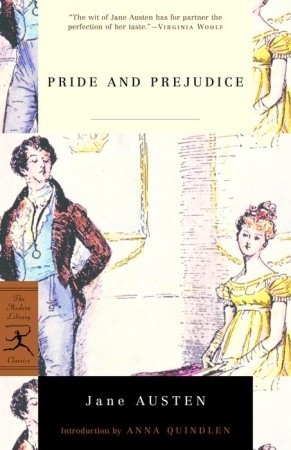
Pride and Prejudice by Jane Austen

This popular classic romance novel by Jane Austen was published in 1813 by T. Egerton, Whitehall. It centers on the story of Elizabeth Bennet, the second child of Mr. and Mrs. Bennet of Longbourn who is also known as Lizzy. She discovered the consequences of rush judgments and happen to be grateful on the distinction of facile goodness and true goodness. Lizzy and Mr. Darcy met at a ball where the latter has no interest in dancing with the former because he thinks that she doesn’t attract him that much. Elizabeth and Mr. Darcy’s first meeting didn’t go well, but what went well is their ending — which you should find out what happened by reading the book!

The Other Side of Love by Attilio Guardo

Published by ReadersMagnet in 2019, The Other Side of Love by Attilio Guardo is truly the novel that offers you a rollercoaster journey towards love. This novel features a teenage romance that is a product of hate and revenge. Conrad, the protagonist, went through a tough break up that made him plot the perfect revenge plan for his ex-girlfriend named Abigail. From all the hearts that he broke for vengeance, he didn’t expect that Debbie Hollis will make him feel guilty and regretful for what he had done. Also, being friends with Debbie was never in his plans, as well as falling in love with her genuinely.

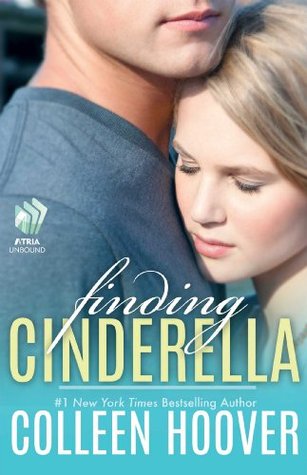
Finding Cinderella by Colleen Hoover

Written by one of the top romance novel authors in this generation, Finding Cinderella is definitely a must-read for readers who are fans of romance and young adult fiction. The title is a metaphor for a girl who accidentally met a guy in the dark and they made love without knowing one another. All that is familiar to them are their voices. When the hour was up, the girl named Six ran out like how Cinderella rushes to be gone when the clock struck 12. Daniel, the guy, cannot stop thinking about the mystery girl. After how many months, they surprisingly meet and Daniel realized that he found his Cinderella.

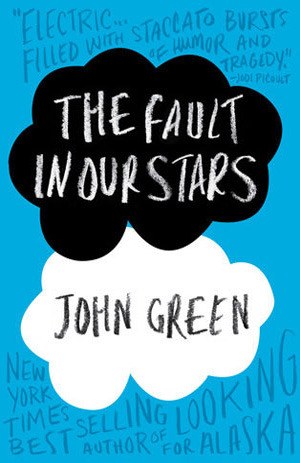
The Fault in Our Stars by John Green

One of the best-selling books written by John Green, The Fault in Our Stars has been making readers feel both love and pain in this captivating novel. There were two teenagers who met in a support group, one who has a thyroid cancer named Hazel Grace and the other who has a bone cancer, who just felt the same exciting feeling to one another. Despite of their diseases, they conquered the odds and went to Amsterdam to make Hazel Grace’s dream to come true — meet her literary hero. However, things escalated quickly and had an unexpected turn, Regardless of it all; Hazel and Gus’ love surpasses life and death.

Dear John by Nicholas Sparks

The remarkable romance author Nicholas Sparks wrote Dear John, which is a novel that centers on the story of two lovers who almost had the perfect love story. John didn’t finish school in order to join the army. He met Savannah, a lovely girl who made his heart skip a beat. They both hit it off, and Savannah was waiting for her lover to finish his duty so that they can start settling down, like what their plan was. However, 9/11 happened. The event made their plan fail since John enlisted again in the army. During their separation, Savannah constantly wrote letters for John until the time that she got married to another man, leaving John devastated.

Of Evangelical Christians in the Science versus Religion Debate

Evangelicalism is probably the fastest growing and most dynamic segment of Christianity. It is hard to ignore the success of evangelical Christians in encroaching and evangelizing on traditional Catholic and even Muslim grounds. In America, they have proven themselves as a potent political force during elections. In the 2020 presidential election, the majority of Protestants, particularly evangelicals, voted for Trump. And along with the Catholics, they present a significant opposition to abortion and same-sex marriage, given the Evangelical sway to religion or culture.

Where do evangelical Christians stand in the science versus religion debate? Many people have the impression that most religious individuals, particularly evangelical Christians, are anti-science. Is it true?

In their book Religion vs. Science: What Religious People Really Think, sociologists Elaine Howard Ecklund and Christopher P. Scheitle shared the results of their national survey of more than 10,000. It is revealed that a strong majority of every religious group see religion and science as either in collaboration with one another or being independent of one another.

What’s surprising is that evangelicals are significantly more likely than any other religious group or the general population to say religion and science can help one another.

The survey reveals 48.2 percent of evangelical Christians, compared to 41.7 percent of Protestants, 39.7 percent of Catholics, and just 13.3 percent of individuals not affiliated with a religious group, said religion and science can help support the other. Just 1.3 percent of evangelicals consider themselves to be on the side of science, compared to 29.4 percent on the side of religion.

What’s even more surprising is that the group comprising the atheists, agnostics, and the unaffiliated are, with a wide majority, the only group to say religion and science are in conflict with each other. The survey reveals that 51.7 percent consider themselves to be on the side of science, compared to 0.7 on the side of religion.

It is also revealed that evangelicals report the lowest level of interest in new scientific and medical discoveries. Just 21.8 percent and 37.4 percent of evangelicals are very interested in new scientific and medical discoveries, respectively.

The majority of evangelicals, at 66.9 percent, have a positive attitude toward science’s contributions to society, compared to the 13.9 percent that believe modern science does more harm than good.

Evangelicals are most likely than mainline Protestants, Catholics, Jews, adherents of non-western religions, atheists, agnostics, and unaffiliated to either witness or receive miraculous physical healing. 39.2 percent and 27.5 percent of evangelicals reported having witnessed and received a miraculous physical healing, respectively. And it should be known that 60 percent of evangelicals agree that scientists should be open to considering miracles.

So, contrary to popular assumptions, evangelical Christians are not anti-science. It’s true that they frown on Darwin’s theory of evolution and disagree that evolution is solely a natural process occurring over billions of years. The vast majority of religious believers, as the survey reveals, are fine with evolution, but they believe God has a special place in creation, so they want to leave room for God to play an active role in the evolution process, for God to maintain an active role in the world. Evangelicals, along with religious individuals, want to protect the idea that humans are created in the image of God.

Science and religion are totally opposite fields of studies, but for religious believers that believe both opposite fields of studies can help one another, science and religion are two sides of the same coin or two wings belonging to the same bird.

The purpose of science is to uncover truths in the physical world. The purpose of religion is the search for God behind the scientific truths. Scientists who encounter the physical world with their senses aided by their formulas and instruments are no different from the religious or spiritual who encounter God or the heavenly world with their thoughts, intuition, and feelings aided by their prayers and scriptures.

Both science and religion seek answers to the same questions but in different ways, and they serve best for the people who strive to live by their truths. They need one another, and when they cooperate, society achieves the best outcomes.

Essential Things to Avoid in Writing a Poem

There is no concrete definition when it comes to poetry because it means differently to people. Some may define it as their medium to get by in this crazy world while others may think of it as an integral part of literature. As the years go by, poetry has become a great avenue for people to let out their thoughts, ideas, and hearts. It just offers so much comfort and safety by letting people write about the things that make them feel a bunch of either positive or negative emotions.

So, when it comes to poetry writing, there are definitely many rules to follow. But, aren’t you wondering about what NOT to write when it comes to poetry? That’s what we are about to find out today; hence, listed below are the things to avoid in writing a poem.

Focusing on the rhyming scheme

Yes, rhymes may give poems the glory and beauty; however, they are not always necessary. You shouldn’t focus too much on the rhyming scheme because it is not the only element that can give your poems that ambiguity and aesthetic that they need.  There are many types of rhyming, such as the perfect rhyme, end rhymes, slant rhymes, and more. You shouldn’t really put all your attention or, worse, force your lines to rhyme. Let it come naturally so that it won’t hinder the writing process and trigger a writer’s block. This is not the basis of a good poem. What makes a good poem is how to deliver the message in such a few impactful words. So, if you put a dash of rhymes in your masterpiece — then make sure that they complement and are relevant to your masterpiece.

Writing about what you think readers want

Although writing while thinking about your readers is a great exercise, there are times that it can compromise the quality of your writings. Also, don’t be deceived on writing about what’s trending. If you are planning to write poems, own them by making sure that they help you express your heart out, let out your experiences, and fuel your passion. Think less of your audience and think more of what you want to write. When you follow the experiences and burden that your heart really wants to release, you will get the satisfaction and sense of fulfillment like no other. You readers will also notice how much sincerity and rawness that you’ve invested into your writings. A great example is how a fascinating poem from the heart by Trinidad Rodriguez wows and moves the readers after the author wrote about her personal struggles as a single mother.

Conveying metaphors every line

Metaphors are like the ace cards of poetry. However, there are also other cards that you can play to make your work better. Using metaphors in each line is really not necessary. In fact, it has the tendency to confuse the readers and change the whole meaning of your poem. Yes, metaphors can make your poem have a deeper meaning but that doesn’t mean that it can mess up your theme. There are also other figurative languages that can add color to your work apart from metaphors. It is better to utilize a handful of them to make your literary pieces more vibrant and captivating.

Using deep and unfamiliar terms

Choosing the language for your writing is important. This refers to the terminologies that you are going to infused into your work later on. Hence, make sure that you have already chosen a target audience so that you can use the appropriate language and tone. The most essential thing to avoid in this case is utilizing deep and unfamiliar terms. Yes, most poems are deep that your mind has to solve the puzzle until you can get the real meaning behind the words. You, however, should notice how most poets use simple words mixed with the correct figurative language so their poems can create deep and vague meaning. That is also what you need to do, do not force yourself to make your poem a Sherlock-worthy puzzle to be solved. Make your vocabulary simpler, which your target readers can easily understand and enjoy. Relevancy and appropriateness are really important.

The Rapid Evolution of Technology

Constant evolution and adaptation of both organizations and corporations is a component of living. Much as shifting circumstances in their setting transforms the shape of subsequent generations of animals over time, evolving customer circumstances lead industries to adjust their goods and services. Digital technology, which directly influences how organizations work and goods and services provided in the established market environment, is one of the most quickly evolving innovations. It is also important for enterprises to consider the great powers that underlie this digital advance.

Life on this planet took a significantly long period of time to kick-start, and forming civilizations took even longer – but the results were amazing once they came to fruition. The most recent human centuries were incredible and in the sense of several billion years of existence. The natural world of our species has not only been reformed but is prone to meteor collisions or millennia of catastrophic seismic activity in the midst of generating detrimental changes in its land, sea, and atmosphere. Eons are calculated by the effects of these shifts. In celestial time calculations, we have incorporated something exponentially significant – something that we know as technology.

Technology is sometimes known as the latest development: the smartphone, the 3D printer, and the VR headset. Even so, we can only grasp its interrelation with the development of our planet by looking deeper. It is more than machines, vehicles, or accessories with innovations. Much like the flying cars on Madhouse Projects in Rick Badman’s futuristic book about automotive engineering escapades, it’s easy to see technology in the context of the future – it is much more than that. It is the collective group of man-made innovations that directly expand our understanding of the universe and strengthens it. We established in the last few centuries a science that “considers the earth’s nature from the point of view of the universe,” as the theorist Hannah Arendt expressed it in 1958. Although, consequentially, we have educated ourselves to disregard the most valuable truth: our evolution alongside integrated technology.

These particular mechanisms are also seen as one way in regards to adaptation – the evolution of life is attributed to their pre-determined environment. Successful mutating species leaving more descendants and their genetics are still intact and prosperous. Those don’t die.  The parameters of what is advantageous are left to the ecosystem – environmental species with features that facilitate their development and survival. Even so, evolutionary biologists are becoming more mindful that the genome forms from both the ecosystem and the species.

What’s the first man-made tool? We cannot rest assured – but we do understand that our distant antecedents started deliberately using discovered items from about two and a half million years ago: tough or jagged rocks to shatter shells or use as a shield; sticks to attain faraway meals; crops or animal parts for refuge or disguises.

Our forefathers did not distinguish from several other mammalian species in this, and in their original forging and enhancement of these items. Many organisms can interact magnificently, understand their motives, and intelligently and creatively use tools. Animals capable of performing this level of cognitive perception include cetaceans, cephalopods, and corvids.

Technological evolution is the continuous procedure of experimenting and rebuilding that has developed over the last millennium – phenomenon such as the fire to make meals and eventually to forge metal; gravity to lever technologies, railings, hydraulics, tires, and pulleys; and thought abilities to create symbolic impressionism, mathematical ability, and literacy. This in particular is the distinguishing key factor that separates all of mankind from the rest of the earth’s life. Alone among species (at least until the crows have put in a million years more effort) humans can consciously improve and combine their creations over time – and in turn extend the boundaries of consciousness. It is through this process of recursive iteration that tools became technologies; and technology a world-altering force.

In the digital market, we are willing, based on our focus, to see the suppliers or goods as the entities in our framework. The immediate world has the biggest influence on people because if you work on a single product, aside from your own model, the most significant performance variables are: your market, your manufacturer, and your rivals. It is easy to see the fact that a product’s differences and its rivals vary. With this being said, we can conclude that the implications of technology on the future in all aspects and industries are bewildering and uncertain, yet optimistic and promising in nature.

Why We Have Obscured Perceptions Towards Workplace Age Differences

We’re frequently reminded about the sharp disparity between the desires and needs of younger and older people in the workplace. These generations, of course, are simply the way they are due to the circumstance that they were born into. Baby boomers grew up in households that endured the Great Depression, continually reminding them of the value of saving money and living modest and honest lifestyles. We can’t blame either party for not seeing eye to eye in terms of social views or attitudes towards money and finance – however, they both comprise the workforce of almost every modern industry in today’s reality.

The widening age gap and growing diversity among individual employees in the work force call for discussions regarding the impact of generational differences on the cohesiveness and efficiency of our organizations. Newer studies have looked into the way we think others may perceive us based on how old we are. For example – a much younger and newer member of a team might worry that other senior members perceive them as clumsy or inefficient, even when it isn’t happening in actuality. A repetitive cycle of misguided perceptions about one’s self and one’s misconceptions towards further fuels and reinforces the unhealthy perception of inaccurate stereotypes and may lead others to begin adapting similar misconceptions and judgements – creating disparity and feelings of alienation among both age groups in any particular industry.

It’s a two-way conversation when discussing this topic, and the book “Patchwork: Conversations Between Generations” by renowned author Carol Wilson-Mack discusses this concept in masterful detail through storytelling. Patchwork encourages to find a way by Carol to utilize her expertise in fellowship and theology, highlighting the positive manners in which youth and elders can benefit and learn from each other through meaningful discourse.

In general, older employees were overall perceived to possess traits such as having a deeper sense of responsibility, maturity, and a more efficient work ethic – but despite this, the baby boomers themselves have bene observed to collectively share concerns regarding others perceiving them as “dull”, “too traditional”, “resistant to change”, or “moody”. Older workers who feel that they fall under these stereotypes tend to wish that others would perceive them in a more positive light.

As you can imagine, the stereotypes portraying younger employees in the workforce involved per-conceived notions of irresponsibility, stubbornness, laziness, a lack of motivation, and the idea that they can’t get something done right the first time without being guided first. In general, many younger workers held generally negative ideas about themselves and were convinced that many senior workers saw them in a derogatory or negative light – which, like the misconceptions that baby boomers are known to have towards themselves and others, is highly subjective in nature but indicative of immense societal disparity in social attitudes that the varying age groups have towards their fellow workmates and their own images in the way they think others perceive them. In general terms, these findings suggest that older and younger employees feel that people perceive them more favorably than they really do. These cases indicate that neither age-related assumptions nor meta-stereotyping are correct.

The dynamic age of the population means that our conventional perception of governance and management is gradually shifting. In addition, workers who have worked in an industry for decades have valuable insights into the organizational structure and customer experience that younger administrators could benefit from.

When it comes to handling an older employee or staff member, it may feel difficult to focus on them in an attempt to demonstrate one’s leadership, but it is all the more necessary because it demonstrates that you value the expertise of your team members and set the standard for a variety of other experiences within the company. It is easy to handle an elderly worker with unnecessarily careful deference by not requesting for their approval for a small initiative or mission, but this can cause them to feel as unwelcome just as much as deliberately undermining their knowledge.

What administrators don’t often understand is that individual workers have varying motivations. So, when setting priorities and benefits, consider how certain workers might perceive a problem. A divide between the two will emerge when a team opportunity is more targeted towards one age group than the other.

Managers will benefit from understanding that workers frequently shift mindsets and evolve over time due to changing expectations, needs, expertise and physical capacity. Such adjustments may take several forms. Analysis has shown, for example, that people experience various forms of work-family tension at different points of their life, from young adults to middle-aged and late adults. Nevertheless, not every worker of the same generation would have the same encounter at the very same precise moment – which is another testament to the complexity of generational diversity in the workplace.

Design a site like this with WordPress.com
Get started