
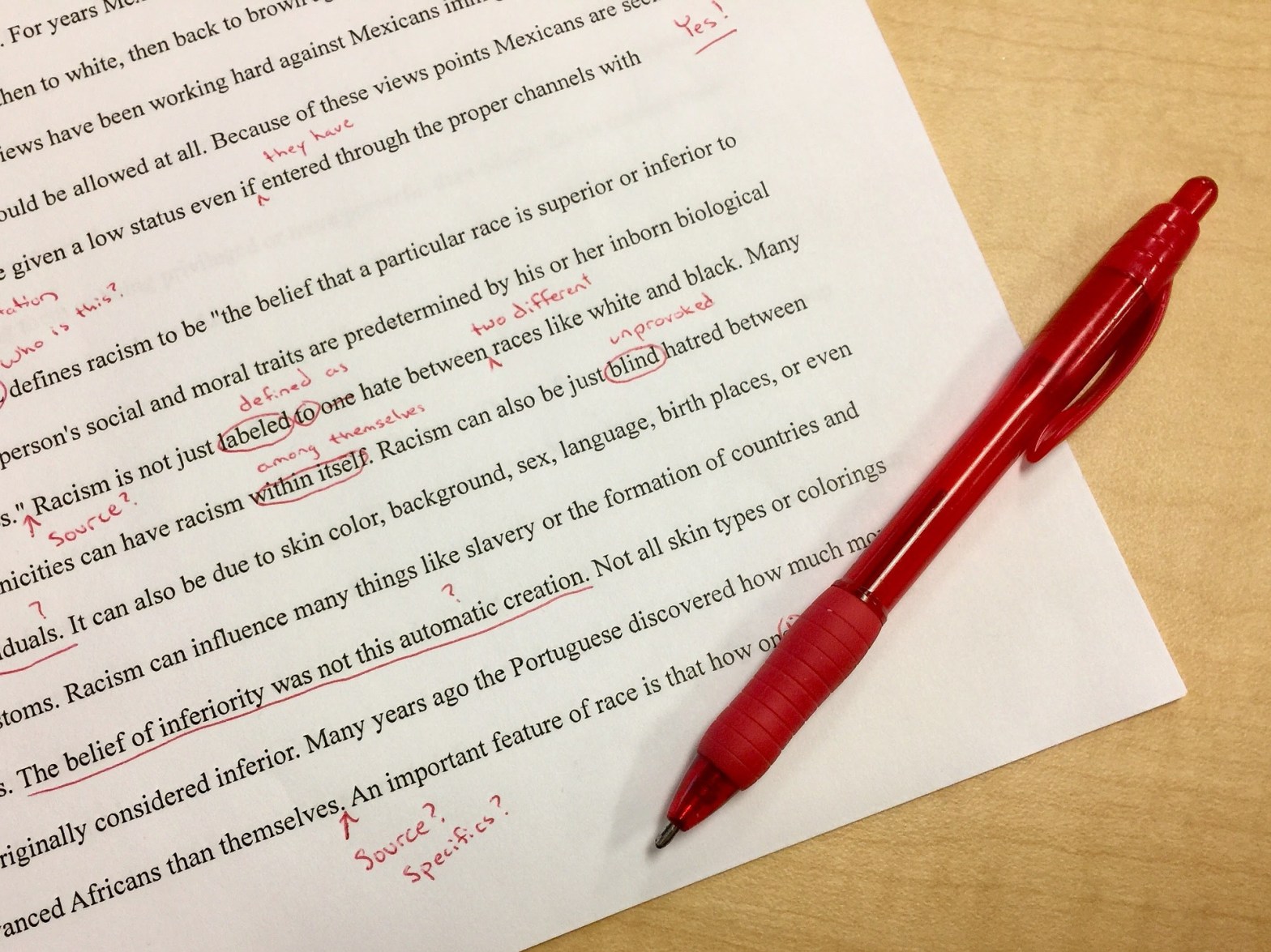
Editing is an integral part of the writing process. It is the stage where an editor tries his best to enhance a draft through clearing up errors, composing clearer sentences, putting more accurate words, and making the content more suitable for the readers. The editing process doesn’t only include the mentioned factors, but also encompasses the adding, removing, and repositioning of words in order to reach the streamline of the whole structure.
Always remember that every writer can become an editor of their own work and likewise. But, there are several instances which prove that editing your own output can be a hassle. It is not because you start to get drained from all the writing, but it is due to the fact that you know that overall idea behind your writing. Hence, getting the help of an editor is definitely the best option.
The significance of editing
The importance of editing can be found somewhere between your drive to finish a homework or your hopes of getting your work published. Either way, you really have to proofread your output before handing it for the benefit of parties, the reader and the writer. Whether you acknowledge it or not, there is really a need to polish your writing and correct the mistakes because it enhances your credibility and enhance your creativity.
Spending a good amount of time in editing a creative, technical, or academic work can increase the clarity of the overall idea, accuracy of thoughts, and uniqueness of the approach.
The common goal of editors
It is already a basic knowledge that when an individual seeks the help of a professional editor, he is in dire need of someone more capable in rehashing his work. But, there is a deeper objective why editors open their arms to polishing some drafts.
According Greg Van Arsdale, to one of the remarkable professional editors of today, “My main goal as a professional editor is not just to return a pristine manuscript ready for publishing, but also to help authors become better writers. I will go out of my way to educate deserving clients at no extra charge. It is important to me that clients such as yourself understand the changes made to their manuscript. That way, their next book will utilize the proper knowledge, skills, and techniques. In the long run, this saves them money in editorial costs and a better chance at publication.”
The two kinds of editing
Susan Bell wrote in The Artful Edit: The Practice of Editing Yourself that there are two different kinds of editing, which are the ongoing edit and the draft edit. The former pertains to the act where the writer constantly edits his work while writing. Ongoing edit is like multitasking. The negative side of it lies in the idea that the writer cannot fully leave a focus on one job; hence, compromising the quality of either of the two task. To give you a better grasp on ongoing edit, here’s a good example: You are currently writing a sentence, but you go back to the last sentence you’ve written and change a particular word. You write five sentences more, then you go back to the last paragraph to change the punctuation.
The latter, which is the draft edit, refers to the type of editing where you evaluate a work that is already completed. All you need to do is to get a couple of page or the whole output and read. After you read, you get a pencil and mark the spots where there are errors. You either rewrite the statement or change the complete idea on that part, because it is only in this type of editing that you can view your output in a completely different angle.
The basic parts that need editing
Spelling – this is the factor that commonly contains errors. You cannot deny that there are several important details in your content, such as addresses, names, and titles. Hence, you should be mindful in writing the nouns. You also have to be meticulous in writing and reviewing the spelling of every word in your content, whether it is common or unusual, for the benefit of your work.
Grammar – it is most integral part of your writing. It is not because it is basic but because if your paragraph has a grammatically incorrect sentence, it will shift the whole idea of your output. Also, a work with an error in grammar will create confusion to the readers.
Punctuation – the mere error in punctuation will create a change in the impact of your output. Punctuations help build the tone and mood of your work. Also, it helps in improving your work’s grammar and readability.
Numbers – it cannot be avoided that sometimes there is a need to include statistics, phone number, and other aspects that includes numbers. Therefore, be mindful in writing the numbers because a change in the figures can lessen the reliability and credibility of your work — especially if you are citing to a certain study.
 The Damsel’s Files