Art and Paintings: The Timelessness and Beauty in Them

Photo by Tiana

Art and paintings are beautifully created works and timeless in their beauty. But what about them is so captivating? What makes them compelling enough to last for ages?

The art and paintings on October Sun are things that showcase the greatness of this art form. Customers can look at the many products they have on the website. Everyone will be impressed with the beautiful artwork they have in store.

But before we go ahead and discover why this kind of art form is timeless, let’s first discuss what art is. Art has many expressions and nuances, each with a unique quirk that distinguishes it from others. Now, we’ll take a look at what makes art so timeless.

What is Art and the Process Involved in It?

The true essence of art has been the subject of numerous theories. Our creative activity of artistic creation, or a means of expression, is what art means. Through this method, the artist engages the audience’s heart, emotions, mind, and communicates their deepest selves.

Stanley Kirby argued that unlike engineering, where most work must be completed on paper, drawings do not necessarily need to be done on paper. Art is the course of how a person expresses themselves via visual arts.

If we look closely at art, it is one of the most exciting aspects of human existence since it may help us learn more about the identity and nature of humanity. Every type of art is an expression of the artist’s inner self and a reflection of their unique experiences. Despite their differences, each of them has a personality.

Materials, media, emotion, ideas, intent, emotions, and memories are just a few elements of art. Many people feel that machines can generate art, while others disagree. Some people believe machines cannot make art.

Comparing Different Art Forms

As we said earlier, art comes in many different forms. There’s music, novels, poems, paintings, murals, etc. For example, art and paintings on October Sun are diverse and cater to people’s other preferences.

The songs of Ed Sheeran offer a fascinating contrast between art and various forms of pleasure. He released the millennial-targeted single Shape of You in January 2017; it is a straightforward, brief tune. One could say that it’s not as complex as other songs, but it is sensational, catchy, and dynamic.

Art is straightforward and hearty simultaneously, just like his musical style. Similar to Ed Sheeran’s Shape of You, art inspires a moment of introspection, fun, and enjoyment. Art and paintings also often reflect the trendy style at the time, with pop being the style that the masses often listen to in the music industry.

The Imagery Found in Painting is Undoubtedly Strong

Some artists, like Van Gogh, can extract a single moment from the recesses of their psyche and present it in such a compelling way that the audience can feel it.

And just like in the scene of paintings and drawings, the same can be said for music, writing, and photography. Although it’s true that most of us won’t become the “best” in our chosen field of art, it is possible to become as good as the artists we idolize. Dedication and training will ultimately help us rise as one who creates art.

Brilliant artists are the ones who produce art that is potent and that the artist finds to be stimulating, evocative, or interesting. However, don’t drown yourself in pity and be stuck in a vicious cycle of comparing yourself to them.

Focusing on your art and skills is best if you wish to create an image that will stand the test of time.

Enjoy the Many Timeless Arts Our World Has

We are all blessed to have so many timeless artworks. From paintings, musics, novels, poems, and more, there is an abundance of artistically man-made beauties that we can gaze upon. It’d be a shame not to enjoy them.

As you traverse your path of finding or creating a timeless piece of art, remember to appreciate every art you come upon. Appreciate them, praise their makers, and remember how they made you feel. Art is an approximation of life, after all.

Just like life, art is best experienced through our personal lenses.

Look at the many art and paintings on October Sun if you need more art in your life. Visit October Sun and discover a piece of art, like Jeanne Tiefenbach-Henderson’s Madonna of the Ways, you may like!

Plant Fossils: What Mysteries Do They Hide

After reading Thomas Mcloughlin’s A Guide to Pennsylvanian Age Plant Fossils, I was intrigued by the implications that analyzing plant fossils had. These are my thoughts.

Thomas Mcloughlin’s A Guide to Pennsylvanian (Carboniferous) Age Plant Fossils of Southwest Virginia is a wonderful picture guide to the plant fossils of the Central Appalachian coalfields, as well as a few fossils of small marine creatures. 

It is also meticulously curated and cataloged for both experts and newcomers to the field of paleobotany, which is the scientific study of fossilized plants. When you open the book, you will not be confused as compared to when you encounter other large scientific atlases of this kind. Every fossil is sorted according to its category and its classification, and the range of where they are commonly found is also noted beside every specimen. Beneath each categorical entry, small but concise text is found that gives a quick and sufficient description. 

More than simply an informative book full of facts and trivia, A Guide to Pennsylvanian Age Plant Fossils is also a tremendously beautiful anthology of artwork. There are fifty-seven sets of illustrations that total nearly 300 hundred pieces, the vast majority of which are colored. So, if you fancy yourself a collector of this stuff, then I suggest you get to secure a copy before the print runs out. 

Paleobotany: The Study of Plant Fossils

Paleobotany is the academic term for the study of plant fossils. Ancient plants, like ancient animals, sometimes leave traces of their existence imprinted on the rock, trapped in amber, solidified in ice, etc., and the nature of their being is quite different from the nature of their descendants today that there needs to be a separate field of study to investigate them. 

Plant fossils are typically impressed on rock surfaces, leaving a sort of engraving that captures their form in a way that lasts beyond the soft tissue. Some plant fossils, which originate from wood specimens, are petrified, although they sometimes preserve some of the original material beneath the new material. Other plant fossils can also calcify into lumps of carbon found within coal deposits, which is why they are called coal balls.

While paleobotany conjures up images of bearded scientists looking at leaf imprints on rocks, the field is much more complex than that. Paleobotany is a highly integrated interdisciplinary area of specialty, especially with today’s modern techniques and discoveries. Case in point: more than half a century ago, a paleobotanist would only have had to study geology and plant biology to properly investigate fossilized plants. But now, with the creation of new fields of science like geochemistry, molecular biology, microbiology, etc., paleobotany has become more complex than ever. 

What Does Analyzing Plant Fossils Teach Us?

While we may think that paleobotany and its findings are too esoteric and too academic for any of us to ever consider its practical merit, that is a decidedly wrong way to approach key areas of knowledge. That is anti-intellectualism, and just because we don’t think or have no idea how paleobotany’s discoveries can benefit us does not mean that it does not.

Firstly, analyzing plant fossils reveals to us that the diversity of the plant species we see today is just a small fraction of the entire range of diversity that has existed in Earth’s biological history. 

This provides us not only a vision of the past and how things became how they are now but also a glimpse of the future and the possibilities of how today’s plant species might evolve in a thousand years’ time. 

It is also through paleobotanical study that scientists can decipher a modern plant’s ancestry and its relative species. Through this meticulous reconstruction of a species’ genetic ancestry, scientists can make further and more accurate assumptions about what a given plant is capable of. 

The awareness of how certain plant species became extinct is also a purview of paleobotany, and by studying their fossils and learning more about the conditions during their period of existence, scientists can better understand how to prevent similar occurrences from happening in the future and perhaps bio-engineer important plant species to overcome certain conditions and thrive in otherwise inhospitable spaces. 

Parable of the Ten Virgins: Keeping Faith and Trusting God

Photo by Ludvig Hedenborg

She Let God Write Her Story by Yelena Borichevska is an interesting and complicated insight into the merits of having faith and handing over yourself to Christ.  

5 Trust in the Lord with all your heart and lean not on your own understanding;

6 in all your ways, submit to Him, and He will make your paths straight.

– Proverbs 3:5-6 (NIV)

I believe these are verses that every Christian should always take to heart. Proverbs have many insightful teachings, and I encourage everyone reading this article to check them out if you have spare time since there is always a moment of learning that is hiding between the lines every time one opens a bible. But I digress.

Faith is quite a mysterious thing. It is intangible and invisible, but properly applying it to appropriate situations can move mountains and overturn seas. It is this overwhelming quality of faith that makes it somewhat paradoxical. Faith is the basis and the foundation for miracles, yet it is also the presence of miracles that strengthen and, oftentimes, foster the seed of faith.

So, how can one develop faith then without the evidence of miracles?

We all have to remember that in God’s infinite wisdom, He gifted us with a great capacity for thought, but this potential also provides significant setbacks to keeping the faith.

Faith, you see, is not rational. And it does not have to be. Not everything in the world can be explained rationally, but the human mind yearns for predictability and recognition. As such, the greatest gift that God has given us becomes a stumbling block to acquiring true faith.

This is because true faith is not something that comes out of discovery, especially in the external sense; true faith comes to us through understanding and experience. Of course, these can come about if you seek them, but that would take too much of one’s time and effort–two things that are often in such short supply in this very busy world.

The most effective method of attaining true faith is also the most tedious. Yet, what can a lifetime of monotony compare to an eternity of bliss? This method is, of course, to wait. Most philosophers would like to define faith as believing without evidence–and while it dismisses the possibility of faith as rational, it does hold water to some extent. You see, having faith means persisting, despite what the world may tell you and despite what your eyes present you. 

Keeping faith is to go against the faculties of the human mind and persevere. 

This path to faith is most apparent in the Parable of the Ten Virgins, which is told in Matthew 25:1-13

THE PARABLE OF THE TEN VIRGINS

Jesus tells the Parable of the Ten Virgins to his disciples after he speaks about the Signs of the End Times. With this context, it is immediately apparent that the story itself is meant to be interpreted as Jesus telling his disciples and us that we have to prepare ourselves for the Second Coming, whenever and wherever it may occur.

In the parable, there are a group of ten virgins chosen to accompany a procession for a wedding. Each of the virgins has a lamp in their possession to light their way, as they expect the bridegroom to arrive sometime during the evening when the sky is at its darkest and the moon at its dimmest. Five of the virgins, knowing that the bridegroom’s time of arrival was uncertain but imminent, brought with them reserves of oil to keep their lamps lit. The other five virgins are unprepared and have brought nothing to sustain themselves throughout the night.

So, when the time inevitably comes that they are to meet with the bridegroom, it is the virgins who came prepared with extra oil which are blessed with the opportunity to meet with the bridegroom. The other half, on the other hand, are left running to find more oil to continue their lamp light.

The bridegroom takes the prepared virgins to the wedding, and the unprepared are left to scramble in the thick of the night.

INTERPRETING THE PARABLE

It is obvious what the parable is trying to tell us. Because we are already made aware that Christ will return, it is imperative that we wait for His coming, fully prepared and ready to walk behind His shadow.

Giving your life to something that is vague and uncertain sounds terrifying, but there is glory and mercy within the grace of God. If you are looking to read more about what life is like keeping the faith and being directly guided by God, She Let God Write Her Story by Yelena Borichevska.

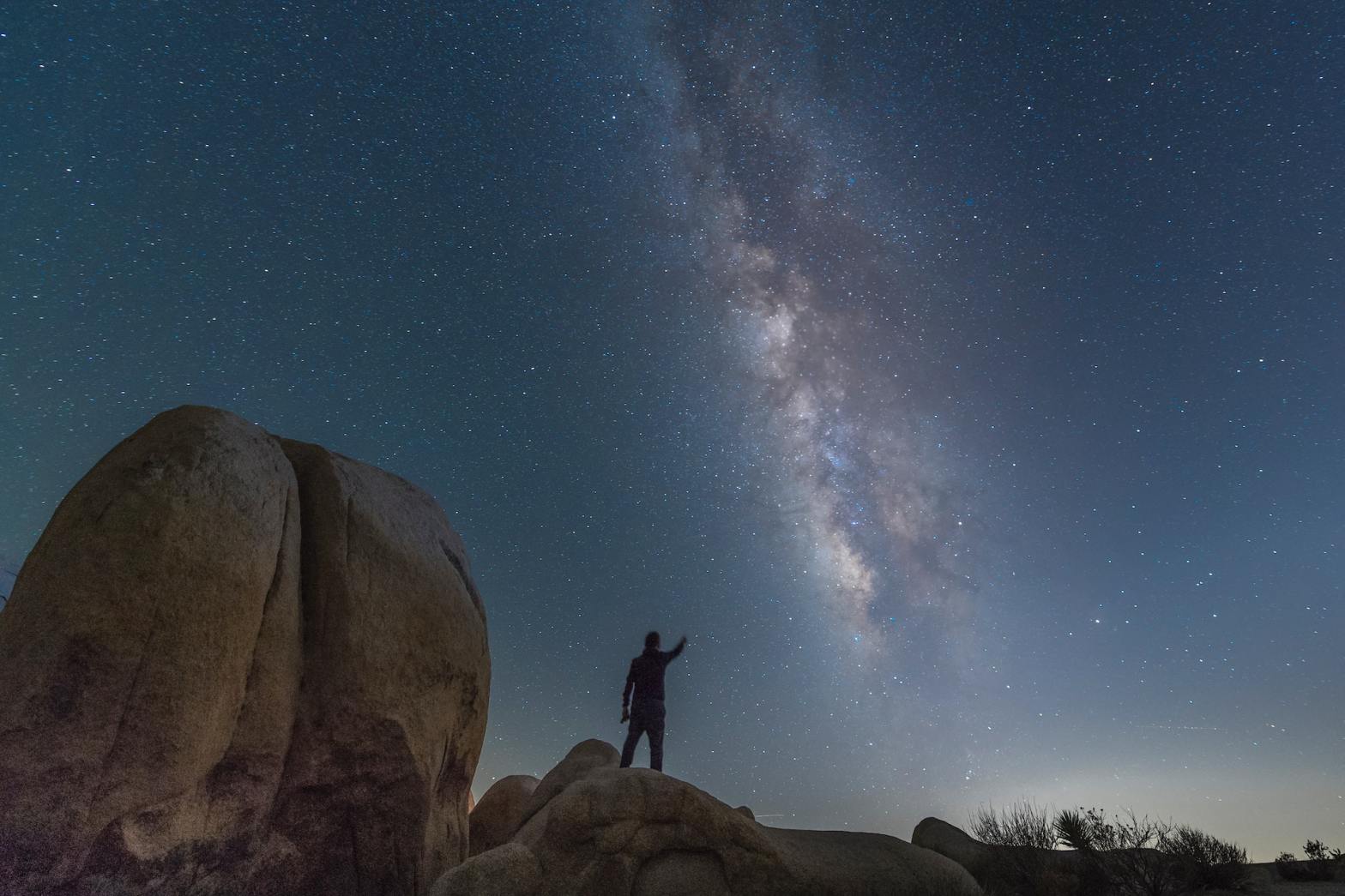
Science Fiction As a Reflection of Humanity’s Hope for Space

Photo by Ken Cheung

The Shadowed Stars book series by Steven Koutz is a great love letter to science fiction, especially in its pulp fiction roots, where the focus was more on space exploration.

Since time immemorial, humanity has always looked up to the stars and wondered: What is beyond there? For as long as we could remember and for as long as we could write down our thoughts and ideas, space, the sea of stars above us, has always held some deeper intrigue, an eternal fascination. We know there is something beyond the clouds and the sky, and our yearning for an answer has never ceased.

Even when we burst through the atmosphere and saw the vastness of space first-hand, our interest in wanting to know what lies in the great immensity of space has never ceased.

Even when we flew satellites up and pointed telescopes at other solar systems and galaxies, our longing to know the wonders of the cosmos and the possibility that there might be something more than just us humans has never ceased.

We will always be questioning our place in the world and the universe at large, and it will never stop. As long as there is no concrete answer, we will never stop wanting to know.

What Are We Talking About Anyway?

Before we go talk about how science fiction is the reflection of humanity’s deeper longing to expand outward and discover the farthest extent we can reach, we first need to talk about the genre itself.

What is science fiction?

While condensing what science fiction is simply impossible, it is possible to try—I can hear my consciousness laughing at me right now. So, let’s throw an attempt, shall we?

While generally confined to our perception of reality (i.e., it is primarily concerned with human endeavors and our interactions with space and the elements the author has decided to include), science fiction is first and foremost more enamored with the potential that either our species has, given the passage of time and the inventions we are bound to create, or the mysteries that the larger universe hides within its folds, its distant planets and lurking black holes, its massive stars and the like.

With that as the premise, science fiction then further attempts to examine what the results of these potentials have; it wants to portray a reality wherein the consequences are made apparent and, ultimately, try to construct a prediction as to how human society would change to incorporate or take into account the elements presented.

Now, the definition that I just garbled up is—to be respectful to myself and my readers—pretty freaking vague. I could have just pointed to a blurb for a Star Wars film and said this is what science fiction is sometimes like, and it would have made as much sense.

The only reason I didn’t try to do so is because that would be a cop-out, and also, I don’t like to add quotes in my articles (the formatting just bothers me).

Now, with that out of the way, we can now talk about how science fiction helps us.

How Science Fiction Helps Us Realize the Beauty of Nature and Space

Science fiction is a great vehicle for people to work out their ideas and their perspectives about the future and the potential possibilities of humanity, especially when it concerns our yearning for space and our longing for other forms of life to interact with and learn from.

The best, most recent example I can give is the Shadowed Stars book series by Steven Koutz.

While the universe conveyed by Mr. Koutz is quite bleak and, oftentimes, depressing, that is because of the entities and creatures living inside of it and not the reality and nature of space itself. Surprisingly in the Shadowed Stars universe, while galactic empires and polities are dangerous and malignant cancers, there is a romanticism in the vastness of space and the mysteries that still lie hidden within its unchartered territories. You see, space and nature itself are not the reasons why reality is full of suffering and the like; it is solely due to the thinking entities–us humans and whatever exists beyond the pale–and their preconceived ideas of what existing should be.

As Jeff Goldblum’s character says in the first Jurassic Park film, “Life finds a way.” And science fiction helps us find such a way.

Effective Ways to Build a Loving and Healthy Family

Photo by Elina Fairytale

Finding effective ways to build a loving and healthy family is essential for any household or family dynamic, so we decided to talk about them today.

Max Teran wants to share how people can procreate the desired healthy family with the help of his book How to Procreate a Healthy Family. He talks about how parents and family members can effectively interact with each other. This is so they can create healthy relationships for everyone in the household.

Relationships and family ties significantly impact young children’s brain development. They are coming to terms with who they are compared to those nearest to them, and how well they can operate in healthy ways depends entirely on how well their family relationships are.

With that said, let’s discuss how you can form a healthy and loving family.

Methods to Build Healthy Family Bonds

Parents are always thinking of ways to build healthy relationships with the families they have. Creating healthy bonds takes time and requires attention from everybody in the household. One of the best ways to develop these connections is to practice effective ways like the ones we’ll list below.

1. Day-to-Day Chores is an Enjoyable to Connect – No rule stipulates that taking care of all the household chores must be a chore. As you collaborate to tidy up and arrange the house, turn up the music, sing along, and dance. Doing chores is an excellent way to start if you wish to procreate the desired healthy family.

2. Try Planting a Garden – Nothing is a finer metaphor for raising children and promoting family growth than establishing and caring for a garden. As a family, you can enjoy and strengthen your bonds while planning, planting, and maintaining the garden.

When your garden produces fruits, veggies, or flowers, it’s a joy to share and enjoy as a family. Planting a garden can also help build a loving and healthy family while constructing a wonderful garden.

3. Laugh and Smile Together to Build Connection – Seek opportunities to make one another happy. Send a video or cartoon that you find amusing. Speak in riddles and jokes.

Watch a humorous film together. Particularly during stressful situations, try to find the positive side.

4. Partake in Creative Endeavors Together – Spend a little money on the required art supplies. Utilize glue, empty paper towel rolls, paper, pipe-cleaner, yarn, paper lunch sacks, school glue, paper plates, googly eyes, craft feathers, markers, and let your creative juices flow.

Kids can also get sidewalk chalk and draw a family masterpiece that can be found on your sidewalk or driveway.

5. Develop One-on-One and Lasting Bonds – Parents require time to spend with each other to keep their relationships strong. With that in mind, kids also need one-on-one moments with their parents and siblings. Ensure that each family member can connect with everyone in the family.

For every family to develop healthy relationships with everyone in the family, a specific set of time and attention is needed. This time is used to enhance those one-on-one bonds.

6. Bolster Healthy Family Relationships Around Nature – Always schedule to spend time outside as a family. Go and do some scavenger hunts in nature. Together, observe the sunset.

Create a sandcastle or a snowman. Try catching some fireflies and release them. Ride a bike alongside the river. Visit the park and have a picnic.

7. Schedule a Stay-cation or Vacation Together – Even more enjoyable than the exciting event itself might be the planning process. Bring the kids along, gather around the dining table to browse catalogs or websites, and allow everyone to express their preferences. Always make “fun” the main goal and spend quality time with everyone.

8. Prepare and Plan Meals Together – Every week, involve everyone in deciding what you’ll be eating for dinner as a family, just like you would when planning a vacation. Together, make grocery lists, review the recipes, and assign jobs to prepare the meals. When one contributes, the dish will always taste better.

For everyone in the family to get the best opportunity of growing into a well-adjusted and confident society member, someone has to know how to build a loving and healthy family. Try out the things listed here and discover which of them works best.

Max Teran has a book titled How to Procreate a Healthy Family, which can teach anyone how to procreate the desired healthy family they want. Get a copy of his book by clicking here, and start learning the methods Mr. Teran recommends!

Shamanic Healing: Workings of the Spirit and Inner Transformation

Is shamanic healing for you? By studying the lessons of the ancients together with modern tools, one is given a self-help guide for inner healing and more.

Many would try to deride shamanic healing as magical thinking, a hoax, or another New Age trend that is sure to fade away within the next ten years. That is certainly not the case, mostly because shamanic healing is not a new trend, not even close. It has existed unbroken since the first humans looked up at the stars; it has been passed on from generation to generation in the form of oral tradition, ancestral customs, and folk practices—and it will continue onward until humanity itself has ceased. 

Shamanic healing is a potent and life-changing approach to recovery that helps patients wash away internal wounds and alleviate spiritual suffering. By practicing shamanic healing, or at least being directed by a master practitioner, we are given the opportunity and the tools to wash away emotional trauma, mental blockages, burdens, troublesome beliefs, and baggage—offering us a new slate to grow and thrive again in the garden of our minds and spirits. 

It is when we are cleansed of all these that we regain the capacity to fully and truly better ourselves, becoming our best versions and succeeding further in the path of life.

There may be many worries and questions when it comes to shamanic healing. Chiefly asked by new patients and practitioners seem to be if they have to call forth spirits and the like to help them.

While some shamanic traditions do involve communing deeply with the spirits and other higher dimensions, most forms of modern shamanic healing (which involves a bit more technology) are more practical and focus only on inner healing, what the body itself is capable of doing.

Shamanic healing is not a faith-based discipline. It does not require believing in that which you may find a hard time comprehending. It is fully based on the practical and the self. Google searches might bring up mysticism and occultism as associated or adjacent subjects to shamanism, but this merely exacerbates the misconceptions already clouding the practice.

This is because most of the body of work produced by shamanism comes from ancient times, and, as such, there is an ancient air of secrecy and dignity obscuring it—which makes for a fertile ground for conspiracies and hoaxes.

The truth is that shamanism goes beyond any working notions of religion. It is more comparable to yoga or tai chi, both of which provide frameworks for exercise and self-understanding. What shamanism offers is not a lens for understanding the world, nor is it an avenue for people to evoke higher entities. Shamanism, in practice, is more of a lifestyle than a set of beliefs and exercises. It is a commitment to bettering one’s self in conjunction with the spirit and the world’s vital energies. 

How Does Shamanic Healing Work?

Shamanic healing, at its essence, is nothing more than deep introspection and comprehension—a more extensive attempt at understanding the body to untangle the knots burbling in the spirit. Of course, this is easier said than done due to the many layers of mental and spiritual walls we may have built, unconsciously or deliberately, throughout our lifetimes. 

This is why shamanic healers exist; they are there to help us when we find our road to recovery blocked and we can’t find the way ourselves. Naturally, shamanic healers are merely there to direct you, and there is no substitute for the self-help guide for inner healing that dwells in the depths of your heart.

When undergoing shamanic healing, the patient only has to lie down and be guided by the words of the healer while also immersing themselves deep into their unconscious. The healer does this in a variety of ways, either via aromatherapy, relaxing music, massage, etc, etc. This is to fully relax the mind and the body, letting the spirit wander more freely and get more in touch with itself. 

The goal of shamanic healing is to clear out the impurities of your internal energies and rebalance them into equilibrium with the energies of the outside world. This imbalance is the root cause of many of our problems, especially those issues that involve personal relationships and self-understanding, which may not mean much in writing but greatly affect our day-to-day dealings.

Everyone can be healed via shamanic healing, and everyone deserves a chance to.

The Christian Community: Why It is Our Duty to Serve One Another

Establishing a good and faithful servant’s relationship with one another and God is an important cornerstone in creating a tight-knit Christian community.

Let us talk about good and faithful servants’ relationships. What are these, and why are they important?

In these trying times and always, I think it is best to look back to Galatians 5:13-14:

13 You, my brothers and sisters, were called to be free. But do not use your freedom to indulge the flesh; rather, serve one another humbly in love. 14 For the entire law is fulfilled in keeping this one command: “Love your neighbor as yourself.”

 Galatians 5:13-14

The pursuit of individual gain and satisfaction, I believe, is the main contributor to many of the ills of today, from war and famine to disease and poverty. These evil things are because most of us do not see our neighbors as part of a great, overarching family anymore. We huddle in our small groups and refuse to reach out to the other side. Even in a small Christian community, seemingly irreversible rifts can occur. 

So what are we talking about here? 

Although faith is all about an individual’s relationship with God and no one else, being a Christian is not merely about yourself. If it was, we should all be hermits waiting inside our own little caves away from each other, worshipping God by ourselves and waiting until we pass away or until Judgment Day comes.

No, being a Christian is more than being pious; it is getting to be part of a larger community of believers and working hard to create the Kingdom of God here on this Earth. 

Although our main duty is to serve God above all else, beneath that is to serve our fellows. It is only when the Word of God is spoken in all the corners of the world that true salvation for the whole of humanity can come—and that can only happen if all of us stick together and learn to go forward as a single community.

Take the greatest problems we as a society are facing now: poverty, war, plague, inequality, and disbelief. These are all issues that stem from a decline in community.

Poverty is because a community has seen it fit to discard a member of their own, leaving them to fend for themselves without the shelter of society. This goes against the teachings of Christ himself, who walked alongside the poor and spoke with them. Who are we to call ourselves Christians when we cannot do as Christ did?

As with poverty, plague is the result of a community that discards members of its own, instead wishing only to care for themselves and not others. If we were truly a unified community, we would see to it that everyone in our flock would have access to food and water, and shelter and ask not for anything in return. But because we have segregated ourselves from each other, we have forgotten how to care for each other and even shun those we think are sick. Did Christ not go amongst the sick and heal them? Why do we distance ourselves from them, then?

Then, there is inequality and what comes with it, famine. A community that is in disarray is one where one individual has more wealth than he could ever spend in multiple lifetimes, and another subsists in the spoils of the rest. Read through every page of scripture and tell me, is that a community that confesses to following the teachings of Christ? It is a travesty that in a world of abundance, there are those who are lacking and cannot feed themselves. It is disgusting, to say the least. If Christ could feed and clothe the impoverished during His earthly ministry, there is no reason that we cannot.

And onward to war—why does war occur? It is because of irreconcilable conflict, which is only fomented when communities no longer feel like communication and reconciliation are options. This is not reflective of the Christian heart of open-mindedness and tolerance. As Christians, peace should always be the goal when it comes to conflict. What’s more, entering into conflict indicates an unwillingness for patient understanding and an unhealthy attachment to the worldly. Remember, there is life everlasting behind the pearly gates, and to entrench ourselves in this temporal world through war only sullies the soul. How can we serve God when we cannot serve each other?

Only when we accept each other into the community of God can we better enact the Word of Christ and prepare for the Second Coming.

Arguing for the Existence of God: Reasons for His Presence

Photo by Mike B

Gary Lindberg is the author of The Vegetable Grows and the Lion Roars, but he is also the author of the phenomenal God’s Existence: Truth or Fiction?

In Gary Lindberg’s God’s Existence: Truth or Fiction?, he proposes a scientific basis for the existence of God, but for a lot of us believers, scientific understanding is an acquired ability.

So, where do we go about finding evidence for the existence of God so that we may know them and have answers when we are asked (without having to have to open up a science book or go to school again)?

And to those who might scoff at the idea of defending their faith, remember the words from 1 Peter 3:15:

“Always be prepared to give an answer to everyone who asks you to give the reason for the hope that you have.”

It is part of our duties as believers and Christians waiting for His return to spread the Word as far as we can—and doing so demands that we put our best foot forward.

First off, it is only the most militant of non-believers that demand you summon God before them—which is quite arrogant and should be ignored. If your interlocutor is doing this, you can simply exit the conversation because that person is engaging with you in bad faith. This means they are not really looking to talk with you but proselytize their beliefs; people like these are not open to changing their minds.

So, when you are talking to an honest and good-faith interlocutor, they will not demand from you God Himself or an actual miracle happening in front of them. Most of these conversations on evidence are typically on the solidity of one’s argumentation.

We should remember that there is no “conclusive” proof. What does this mean? Conclusive proof means that it is something that is universally accepted, something that cannot be questioned. No one has that. Living is not even something conclusive to everyone—some believe that life is simply a simulation or that they are a brain in a vat and everyone and everything else around them are not actual entities.

The only thing we need to do, as believers, is to provide firm and logical arguments. This is also beneficial in increasing your understanding of yourself and your faith. Here are two that have very solid foundations:

God is the Beginning of Goodness. Though some people might say that morality is something subjective, there still exists baseline statements that all people seem to understand: killing is bad, stealing is bad, cheating, provoking without cause, etc. All cultures and all peoples consider these, to one degree, things to be avoided. 

Feeding the poor, taking care of the elderly and the young, and loving your fellow humans—these virtues are all present everywhere.

Humans know what is good and what is bad, and humans agree with the good and abhor the bad. This is something universal.

Because this is the case, there must be a singular source for it since it is too consistent across the board. And this source should be one that has great knowledge of human psychology and society.

A mortal entity cannot have such knowledge, even if they are long-lived.

As such, this entity must be all-knowing. And if this entity is all-knowing, there is no difference between it and a god. Therefore, a godlike entity must exist. 

If there is no god who is the source of morality, then there can be no objective morality.

God is the Prime Factor. This line of argumentation was first posited by St. Thomas Aquinas, who wished to develop sound and logical reasoning for his faith. To this end, he wrote down Five Proofs of the existence of God.

The Five Proofs of St. Thomas Aquinas follow the same general structure of arguing, all things are in this condition, but these things cannot have begun in this condition; therefore, there must have been a “first” or “prime” factor that is the initial cause of all things to be in this condition.

From motion to causation, contingencies to gradience, and finality and beginning.

These are all conditions that have to have an outside entity facilitating their occurrence, an entity that is all-powerful and outside of space and time. This entity is akin to a god; as such, this godlike entity must exist.

If there is no god who is the prime factor in all these things, then there can be none of these things.

If you are someone who is more scientifically minded and wishes to explore arguments for God’s existence along those lines, I recommend Gary Lindberg’s God’s Existence: Truth or Fiction? And if you wish to know more about the man himself, you can read The Vegetable Grows and the Lion Roars, his personal accounts as a foreign volunteer.

Tough Times Will Always Reveal The True Colors Of The People Around Us

Photo by Yogendra Singh

During the worst times of your life, you will see the authentic colors of the people who say they love and care about you.

Life is undoubtedly complex, but one thing that makes those most difficult, challenging periods worth it is that they always reveal the truth. Whether it is the beginning of a new journey, a terrible loss, or a change of heart, one thing is sure.

Tough times open our eyes and confront us with reality. And sometimes, even though we cannot see, these transformations can be true blessings in disguise. People say that during the worst times of your life, you will see the true colors of the individuals who say they care about you. And honestly, I couldn’t agree more.

If you are going through the same right now, do not despair. This might be a lot to take in now, but it is true. Whatever is happening, I want you to know that you deserve more. You, my friend, deserve someone who needs you in their life, not someone who only sees you as an option. 

Here are seven signs that you are in a relationship with a person who does not deserve you:

Sign #1. They make you doubt yourself. They make you feel less like nobody. Nothing you do is ever enough for them. The only thing you think when you are around them is self-pity, which is a big red flag.

Sign #2. They lie to you. You feel it in your gut. They do not always tell you the truth. Instead, they do their best to cover the fact with silly, childish excuses that even a kid would find suspicious. This is a sign that you should stop and reevaluate this relationship.

Sign #3. They do not have time for you. Other people are always more important than you. Friends, family, and even colleagues all come before you. If this is something that has been going on for a long time, it is time to put a stop to it.

Sign #4. You feel like you give more than what you receive. They treat you like a doormat. They use you. You are open to sharing every part of your life with them, but they are not ready to reciprocate. For some reason, they do not. You are the only one who always sacrifices and fights for your relationship.

Sign #5. They want to change you. Mold you into a person that will perfectly fit their ideals. And you are letting them. You are allowing them to turn you into someone you are not. If this is the case, stop it before you lose yourself completely. You are enough. You do not need to change to make someone happy.

Sign #6. You do not feel like you can rely on them for help. You are lying if you know your partner will not be there for you when you need him or her the most. Confront them while you still have time. The sooner you do it, the better off you will be.

Sign #7. You feel insecure around them. You are worthy of more than you can imagine. You cannot see it. You cannot see your worth because of them. Do not let yourself lose your identity over anyone. You deserve someone who needs you, loves you, and cares for you, not someone who only sees you as an option. You deserve someone who gives you strength, not takes it away from you.

Cap-Off Statement

We always see characters from fairy tales saying they are trying to find their true love, but the question is, what are the true colors of love? Some might say it is the perfect likeness of a rainbow; others might say it is colorless. 

As Raymond Quattlebaum wrote in his book, The Color Of Love, love is the most powerful emotion in the universe. God is Unconditional Love. Humanity is the offspring of God’s love in human reality. The Color Of Love is a book of poetry. At the same time, it is a romance book. Once you have read the book, you cannot afford to stop reading. You will become very much involved and find the book quite interesting and not want to put it down and wind up buying it out of satisfaction and content.

What Makes A Dog A Man’s Best Friend?

Photo by Dmitriy Ganin

He is your friend, partner, defender, and dog. You owe it to him to be notable for such devotion.

Dogs do many things for us, so dogs are usually referred to as man’s best friend. A dog is an excellent pet because it is good for your health, can make good guards, and provides you with the emotional stimulus you need.

To put it simply, dogs are excellent. Whether they’re barking at their leash to convince you to take them on a walk, begging for your food, or merely being ecstatic when you get home, these dogs do all of the small things that put smiles on faces worldwide. What are some more endearing reasons dogs are and always will be man’s best friend? Read on.

Reason #1. Dogs have terrible short-term memories. One of the worst facets of human friends is that, mainly speaking, they recall all of the times you’ve hurt them and will hold it against you for life. On the other hand, dogs have the “gift” of poor memory. That means you can play keep away with their food, mess with their tail, and tug on their tails to your heart’s content, even if it annoys them. You get to have fun, and your dog will forget about it and treat you like their best bud within a few minutes! It’s genuinely one of the only win-win scenarios in life.

Reason #2. Dogs have excellent long-term memories. While your pup will forget you pulling on their ears, they won’t forget the connection they share with you, and if you are marvelous to them, you will leave a lasting effect on them that they’ll never shake off. 

Reason #3. Dogs can mimic your emotions. Based on your body language and the tone of your voice, your dog will do its darndest to emulate your present state of mind. They’ll look at you with large doe eyes when you’re down. When you’re angry, the fur will rise on their backs, and they’ll start growling and barking at inanimate objects. Whereas people might not respond to your emotional downswings and upswings in a way you’d prefer, dogs will always be there whether you’re depressed, thrilled, or anywhere between.

Reason #4. Dogs have your back. Your dogs will defend you even more vehemently. Whenever a girl scout cookie peddling entrepreneur or a creepy solicitor knocks on your door, your dog will be beside you barking at them as you tremble behind a corner, too scared to answer. 

Reason #5. Dogs are brilliant! Intelligence differs depending on the type of breed you get, but overall, dogs are some, if not the most intuitive, animals around. This is shown by their multiple facial expressions, ability to hide toys in the strangest places deviously, and more. 

This is best illustrated in Alison Keenan’s book, “Piper Finds Her Special.” This book offers a peek inside the mind of a therapy dog as she unravels her unique purpose in life while giving a reading program to children. This story is true about Team Keenan, who works with children with reading challenges. Through unconditional love, the dog and her owner help children lose their fear and anxieties while reading, ultimately increasing their reading skills and comprehension.

Reason #6. Dogs won’t leave you pending. Did you ever make plans with a human friend, only to discover they canceled at the very last minute? No need to fret about that now when you have a pet dog. They don’t know how to use phones and makeup excuses, abandoning you to your paltry, lonesome microwave dinner and TV. They’re there for you and you alone!

Reason #7. Dogs know how to live. Simply put, dogs behave like humans who aren’t concerned about the more absurd aspects of conscious existence. For example, running errands, paying the bills, getting an education, dealing with annoying people, etc. They want to wake up, run around, say hi to you, play with their toys, nap, eat, nap again, eat again, and sleep. Is that so bad?

Final Say!

Humans have specific responsibilities thanks to our “intelligence,” but it would be nice if we could all go through life like dogs, carefree and entirely confident of ourselves. At the minimum, if you have a dog, you can live harmoniously with them. As long as you know what you are getting into, it’s worth it!

Design a site like this with WordPress.com
Get started