Freedom of Choice: An Essential Right

Freedom to choose and decide is one of the most fundamental rights bestowed on man. What we do with this right can make or break our life and future. 

Freedom or free will is perhaps the greatest gift ever bestowed on man by society or God. Coupled with the right to choose and select freely without any constraints, it would then appear that this fundamental right becomes unstoppable. Dr. Julius Mosley II’s book Living Life With Blinders On discusses how God has gifted us with choices, with the free will to make decisions while we are all still alive. These choices are present only in the physical realm and will be gone once we all pass away from this life.

But this right is not without accountability or responsibility. This begs the question of whether freedom of choice is absolute or conditional. A thin line is drawn clearly between absolute freewill and conditional freewill. It is a considerable debate subject, but the answer would remain dependent upon the situation, especially when it breaches moral rights and responsibility. 

Freedom of choice can be beautiful but can also be infringing and unpleasant to others. Here are some of the pros and cons that are attached to an individual’s freedom of choice.

The Pros

The pros of freedom of choice benefit the most people who practice this fundamental right. The benefit can either be physical, mental, or emotional. 

Happiness

One of the offshoots of freedom of choice is happiness. A person’s free will and freedom to decide is a significant factor in how they end up happy. For instance, if you’re given this fundamental right to decide for yourself, as a natural human reaction, you would automatically go for decisions that would benefit you the most, such as activities on self-love and self-care. 

It’s not so much about being free to accumulate material things that make a person happy, although this can be supplementary. It’s more about being able to pursue things that can bring meaning to your life, doing things that excite and stimulate you, and those that keep you motivated and inspired.  

Socialization

Freewill comes with the right to choose whom to interact and socialize with. And as a bonus, freewill comes with the right to express one’s thoughts and opinions freely. Socialization is also correlated to a person’s behavior, participation in activities, and behavior in public or private life. 

Good Mental Health

Developing good mental health is another advantage of having freedom of choice. Good mental health is characterized by self-confidence, self-love, self-care, an overall sense of optimism, good self-esteem, and goals or purpose in life. Being free to love yourself and make choices geared towards improving yourself are all the marks of a person having good mental health. 

The Cons 

The cons are the ones that draw the line between freedom of choice that’s essential and freedom of choice that’s disastrous. It also puts a real meaning to what freewill is really all about. 

Offensive

When your choice infringes upon other people’s rights, that’s when freedom of choice becomes a con or a disadvantage. Since freedom of choice allows a person to do or say things as they please, this limitless and uncontrolled action can lead to overstepping boundaries and crossing lines with another person’s rights. For instance, you enjoy listening and jamming to loud rock and roll music. However, you are living in a somewhat close-quarters apartment complex, and your neighbors are older people. Although you may love listening to loud music, in this case, you cannot enjoy it at its loudest since it will intrude on your neighbor’s right to live in a peaceful surrounding and their right to rest and sleep peacefully. 

Slander

Another disadvantage to having uncontrollable freedom of choice and freedom to express is that you tend to say things that can damage another person’s reputation. This is when freedom of choice becomes a conditional right, or free will is limited on certain conditions that aim to protect the rights of another person. 

Hostility or Violence       

Too much freedom or liberty often leads to hostility or violence. Sometimes when a person exercises their right, they overpower another when they’re so bent on getting their way. And if they’re unable to get what they want, it would result in frustration that leads to uncontrollable emotions of anger and hostility. 

By far, free will is the best thing that ever happened to man, but man’s own choices led them to their downfall despite having such a gem of a fundamental right. At the end of the day, our free will or freedom of choice should always be coupled with responsibility – responsibility towards ourselves and others. And that is when freedom of choice becomes the ultimate essential right. 

The Thrills of Thriller Genre

What is a thriller?

“Thriller” is a fiction genre, sometimes called suspense fiction, and is a genre of literature that generally requires fast-paced plots, full-packed action scenes, and limited character development. Part of the glamour of thrillers comes from what their stories are about and how they are told. The plot of a thriller is usually driven by the villain, who represents obstacles that the hero must overcome. The newest book of Frank R Heller entitled “The Secret Empress,” is an excellent example of how a thriller genre can take you on to ride full of suspense, action, surprise, and excitement.

 How is it different from straight mystery or suspense?

There is an excellent distinction between straight mystery or suspense and Thriller. While the former slowly generates feelings of anxiety, anticipation, and uncertainty in the audience, Thriller is a fast-faced, gripping, plot-centered story. If the suspense is waiting for the pencil to drop, Thriller is the sequence that follows the reveal. Straight mystery or suspense, focusing on anxiety and building tension, can have a much more mundane set of external events while focusing on the internal conflicts or employing dramatic tension. Thrillers fall in between by having a more action-oriented plot than suspense, while still digging into the complex psychological aspects that make suspense so engaging for the reader.

What makes the reader love it so?

While reading the Thriller genre, we automatically and invariably align ourselves on one side or the other. That’s what reading is about, and we experience it as if we are the character of the story we are reading. Going inside the heads of characters who are downright evil, or at best morally ambiguous, is a thrilling adventure in itself. We relate either to the victim or the detective and, in many cases, with the criminal. It all depends on how the author writes and chooses to convey every prose we want to offer to their readers. Such a view opens up a lot of psychological doors in our minds that is endless as our imagination. That’s what makes Thriller appealing to the readers because it too engages the intellect too. The twists and turns of the Thriller keep our adrenaline flowing and activate a part of our brains that is normally stimulated. This sets off chemicals that have us feeling euphoric, and the feeling can be very addictive. The exposure to dangerous situations, the twists, and turns of the story, and the edge-of-seat drama give a real-life experience almost like the thrill you feel on the rollercoaster ride.

Every human being varies from each other, but one human commonality is the love of storytelling. Since time immemorial, human beings have uttered myths that were the foundation of the storytelling we know today. From telling tales through the cave paintings to the moment first writing was invented and introduced a form of communication and self-expression, the sprouting of the literary tradition that started from Homer, Edgar Allan Poe, and all canons who created the scenery of the thriller genre.

But still, every literary genre’s gest came from the moment when humans were under no control of their emotions and experienced internal and external crises. Humans, after all, are the central motif of why we read and experience literary art. The gift of storytelling permits us to live more than one life in our lifetime. Isn’t it fascinating to ponder such an impossibility?

Catholics and How They Commune with God

A prayer is defined as an act that aims to activate a rapport with an object of worship through deliberate communication. In other words, prayer is how a believer of a religion or faith communicates to a deity or deified ancestor. For Christians and Catholics, prayer basically means the time to talk to God.

There are many reasons why someone prays. One of these reasons is to honor or give respect to God. Another is to give thanks for the blessings He has given to the world. Prayer can also be said in order to ask for forgiveness. All in all, prayer is a tool by the faithful that allows them to deepen their bond with God, as evidenced by Judith Martin Alford’s story book about relationship with God.

The book, entitled “The Hands of God,” shows how people who all have a profound experience with the Holy Father say their thanks through different prayers as they experience God’s powerful intervention in their lives. Though their experiences with God are different, the people who share their authentic life stories all have one thing in common: they are fervent and frequent prayers, if not before, then after their life-changing experiences.

Unlike most religions, prayer in the Catholic and Christian sense is a bit more democratized than rigid. The most basic thing to start a prayer is just the willingness to take time and talk to God. They can talk to Him, ask for His forgiveness, or even thank him for all the blessings He has given the world. There is not much ritual needed.

However, that is not to say that the Roman Catholic, and by extension, the Christian Faith, does not have a tradition in prayers. Nothing can be more wrong. Christianity has different kinds of specific prayers for different types of occasions or situations. Most of them are intercessional prayers or prayers that ask the various saints or Mother Mary herself to intercede on their behalf.

Among the more well-known prayers in the Catholic faith include:

The Lord’s Prayer

Among the prayers in the Christian faith is the Lord’s prayer. It is a prayer that Jesus Christ himself taught his disciples when they asked him about how to pray. The Lord’s prayer appears twice in the Holy Bible. In the Gospel of Matthew, Jesus teaches his disciples the prayer during the Sermon on the Mount, and the next is in the Gospel of Luke, where Jesus taught it when one of the disciples asked Him to teach them to pray “as John taught his disciples.” For many, The Lord’s Prayer is the most complete out of all of them.

The Sign of the Cross

The Sign of the Cross is a citation and a ritual blessing recited by the Christian faithful. The sign of the cross is the most common prayer in the Catholic tradition as it is often recited before any other prayer. The Sign of the Cross is usually done with the right hand tracing a cross across the body, starting from the forehead down to the middle of the chest, then across the shoulder, from left to right, as the formula of the Holy Trinity (In the name of the Father, the Son, and the Holy Spirit. Amen.) is recited. Second-century Apostolic Tradition dictates that the Sign of the Cross can be used during the minor exorcism of baptism, during ablutions before praying at fixed prayer times, and in times of temptation.

The Holy Rosary

The Holy Rosary refers to both the knots or beads used to count the component prayers that comprise the prayer and the prayer itself. It comes from the Latin: rosarium meaning “crown of roses” or “garland of roses.” The rosary is arranged in sets of ten Hail Marys (called a decade) and surrounded by a Lord’s Prayer at the beginning and a Glory Be at the end. The Fatima prayer of “O my Jesus” is also often said after the Glory Be by some Catholics. A rosary also has five decades, which corresponds to a mystery. There are four mysteries in total, with three original and one more added to by Pope John Paul II. Each of these mysteries is a meditation on the life and death of Jesus Christ, starting from the Annunciation until the Ascension. These mysteries are Joyful, Luminous, Sorrowful, and Luminous Mysteries. The Holy Rosary is notable in that it is also a prayer representing the Catholic emphasis on “participation in the life of Mary, whose focus was Christ,” and the Mariological theme “to Christ through Mary.”

Nurturing the Seed of a Faith Once Lost

Faith requires devotion and dedication. However, no matter how much we try, there will be times when our faith in our religion will falter or, worse, vanish. However, this is normal, especially if we are just normal believers and not saints. Our loss of faith may be due to many reasons. Some might get disappointed and then turn away from God because He “does not listen” to our prayers. Some can be convinced by others that faith is just worthless nonsense and a waste of time. Still, others might just fall off “naturally” from their faith. With this said, it does not mean that God loves us less. God has selfless love for us. This is like the selfless love on God Cares book by author Kwaku Mansah.

Even if we stop believing in him, God does not stop believing in us. He gives us a chance to redeem our faith. Thus it is our duty to reciprocate this love and rekindle our lost faith in him. This process can be long and arduous, requiring a lot of sacrifices. Even then, not all may be fortunate enough to get back that faith. After all, for people to regain what they once lost, they themselves must at first want it back. People who do not want to get back their beliefs won’t get them back in the first place. To get back their faith, they need to first desire that faith.

A Seed of Faith Left Buried.

Deep inside the people who have lost their faith, yet express an inclination to believe again, is a kernel of belief. This is like the opposite of the seed of doubt. If nurtured properly, this kernel will fully blossom back to the faith they once had. However, if left alone, this seed will wither and die, along with their creed.

Nurturing the Seed

The easiest way to nurture this seed is to return to the beginning. Think back to the time when Catholicism was just being introduced to us. Just like a child is full of curiosity, this faith will slowly blossom by letting it wander and wonder. It is essential to ask questions and look for the answer to these questions in all the right places.

Looking for Help

There is no shame in asking for help. We do need it from time to time. However, it is essential to talk to someone who you trust when talking about this struggle in your faith. These people, especially if they share the same belief, will help you in your journey back to the Christian religion. These people love you as God loves you, and they want to share that love with you. Listen to them, and you might be surprised at what you hear.

Continue Nourishing that Faith

As you find yourself and your lost faith, it is essential to continue nourishing that tiny seed of faith. You can do this by asking hard questions. Do not worry if you seem to not find the answers. It is normal. Remember, God moves in mysterious ways. His actions and knowledge are without end, and only by believing in him do we someday realize his aims and goals for us.

Pray

Prayer is our one single way to talk to God. This prayer does not need to be the usual prayer. This can be your personal prayer. This can be your small conversation with God. Pray every day and then pray some more. You’ll be surprised at how much prayer can help in bringing you back to the Christian faith.

Participate in the Holy Eucharist

The Holy Eucharist is a weekly Catholic Ritual that affirms the presence of God. The Holy Eucharist or the Holy Mass is a spiritual and communal experience. Being in a solemn and spiritual atmosphere with people who share the same faith as you can influence how much you believe.

Work Through This Struggle at Your Own Pace

Amidst all this, it is important to remember that your faith is your own. It is nobody else’s. As such, you must take your own time to get back into it. Rushing back to believing in the faith usually means the foundations that made you believe again were done without careful consideration and deliberation. These foundations might be weak, and what results would be a falling out with the belief again. Taking your time by asking questions and making sure that all those doubts are ironed out is key to returning as a faithful Catholic who may not lose his faith again.

Praying to Fight Fear

Fear is an emotion that everybody has. It is an instinct we intrinsically have even before becoming more civilized.

It was an unpleasant emotion because we needed it to survive. Fear usually manifests when we perceive or recognize something threatening or dangerous. Whenever something triggers our fear, our response is to fight or flee. This fight-or-flight response that is within us was crucial in our survival. Fear, after all, is vital until we reach a more sophisticated way of life. Without it, we would have been extinct and gone forever.

With a better understanding of emotions, humanity, in general, has figured out how to conquer fear. Our coping mechanisms in response to fear have grown. If then, our options were only either to run and hide or to fight, now it can depend on our personalities. Sure, the primary responses of “to fight” or “to Flee” are still there, but we can redirect the fear more creatively to more creative outlets. We can either draw or write a journal to confront our fears. Or we can pray.

Using Prayer to Conquer Fear

In God’s Perfect Love and the Other Side of Fear, the author, Veronica Lisare, has not had a perfect life. She had not experienced a good life at all. A history of childhood abuse brought her crippling fear and low self-esteem. For lesser people, that would have been the end, just another number, drifting aimlessly, hoping that nobody would come and get her. However, faith would have none of that. In time, she would find someone who taught her to pray.

These constant prayers became her weapon of choice whenever fear would again begin to grip her. Sooner, she would figure out the ultimate love of God. She recovered, and her self-esteem slowly got back up. The fear that used to grip her has now turned into joy, hope, freedom, and fulfillment. She shares these stories everywhere to help inspire those who have had the same experience as her until she became a minister of the truth of the Gospel of Jesus Christ.  

Of course, cases like Lisare’s are very rare. Not everyone can be blessed with to have that opportunity where you can carry your life somewhere. However, using prayer as a response against fear has become immortalized. Especially for those who are super religious, nothing beats a short prayer to combat uncertainty.

Prayer, God’s own special way of communicating with him, is a very flexible and malleable weapon in combatting fear. Some people use it to ward off evil. While others also use it as a lifeline to combat hopelessness and despair.

Prayer Against Fear

There are types of prayers that one can recite depending on the situation. Below will be examples of these prayers. However, it is essential to know before everything itself that, like in all situations, nothing will beat a homemade and sincere prayer. Almost always, these types of prayer and their sincerity will be the ones to bring courage to those who need their powers.

A Prayer to Reduce Fear:

This prayer directly appeals to God to alleviate the dangers surrounding the one praying. It asks Jesus for comfort and his company in this time of fear. It goes:

Dear Lord,

You know that we live in a crazy and chaotic World. You Also know my struggles in my daily life. When life gets to be too much, please help me come to you. Calm my thoughts and emotions and open my heart to your peace, comfort, and wisdom. Help me not live in fear. Please reduce the feelings of fear and anxiety that plague me. Help me rest in You and trust You as I navigate through this broken world; in Your name, I pray, Jesus, Amen.

A Prayer through Fear

This is one of the few examples of prayers to carry one through fear. In this prayer, the one who prays asks God to calm himself down and to stop worrying. It goes:

Heavenly Father, help me through all of my days. Teach me not to worry. Remind me to not be anxious. As it says in Philippians, ‘Do not be anxious about anything, but in everything by prayer and supplication with thanksgiving let your requests be made known to God.’ I am making my requests known to you right now. I need help. I need you. I thank you, Amen.

Paying God’s Love Back

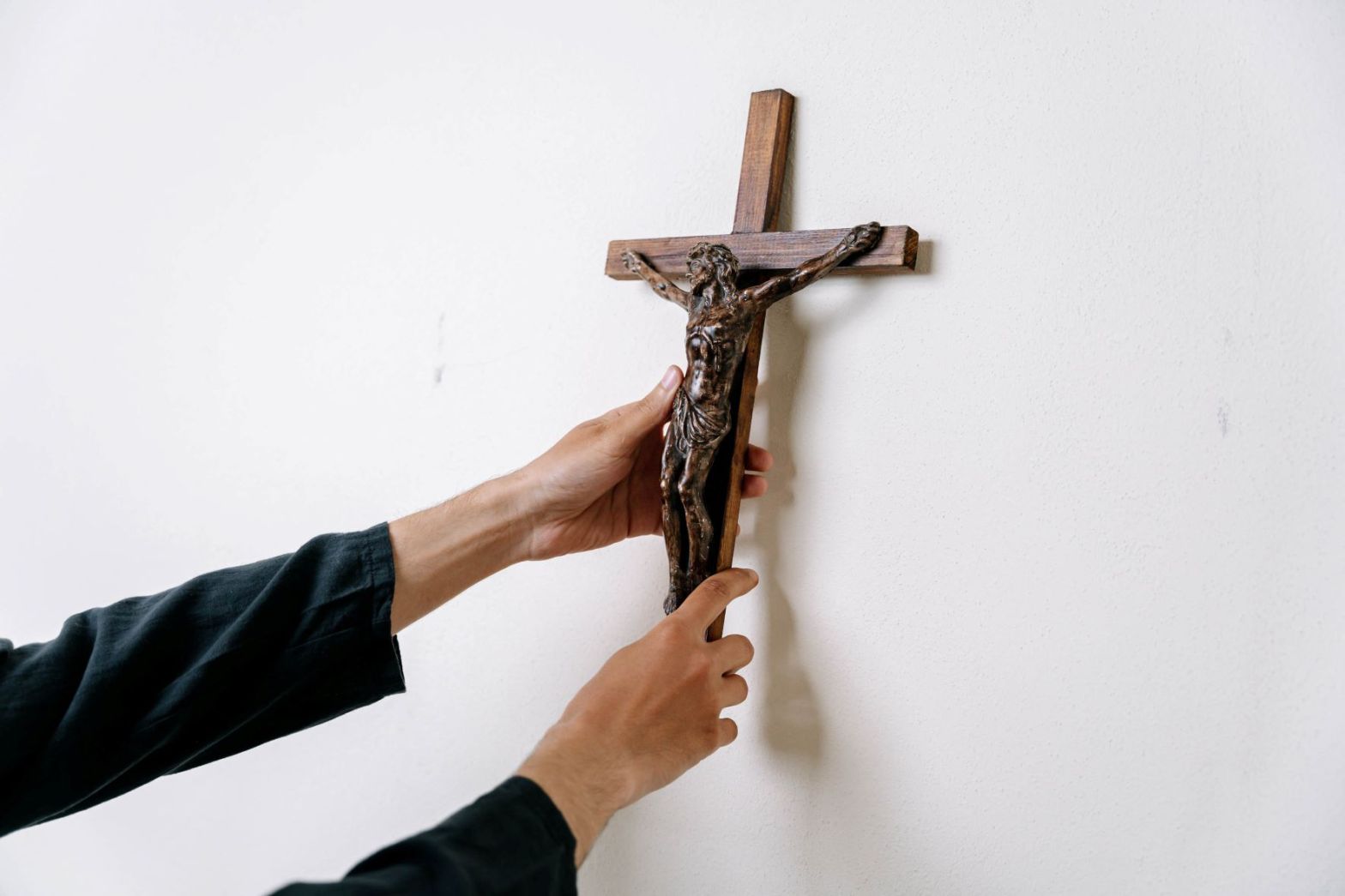
The most common symbol of the Roman Catholic Church is the crucifix

In Roman Catholicism, the crucifix follows the design put forth in the Latin tradition. This tradition is to include in the front of the crucifix a corpus or the body of the Lord Jesus Christ as he makes the ultimate sacrifice to cleanse mankind of sin. This emphasis on Christ’s death shows God’s ultimate love for his creation. The act of crucifixion was God’s agape.

Agape is what we call the kind of love that is defined as “the love of God for man” it is also what we call “man’s love for God. It is often considered the highest form of love and charity. This ultimate love of God can show from different places and in different kinds. For example, this ultimate love of God in Lisare’s book shows up in an anecdote about how the author of the book overcomes challenges while using this same love as inspiration. In the book, Lisare overcame her crippling fear and low self-esteem by having a rewarding nursing job while also being a minister for the Gospel of Jesus Christ.

God’s act of agape is something he did out of his love for us. It was not forced out of him; it was not done because it was his responsibility. For all we know, he could have released another plague or another flood to wipe out humanity and make the slate clean; however, he did not do all those things because he made a promise to Noah and, by extension, a promise to humankind. Isn’t it only right that we show that we appreciate his love and love him too?

The best way to let God know how much we love him is through the Bible? So what does the Bible say about loving him?

Knowing God shows we Love Him.

 This one is a no-brainer. To love someone means to appreciate something about them. It might be the way they talk or simply the way they are. The first thing to appreciate something is, of course, to know him. The same is true with God. Using the Bible as a baseline for knowing him, we take the first step towards loving him.

Spending Time with God is to Love Him

 Whenever we love someone, we want to be with them. After all, it takes love to appreciate someone’s company. Spending time with someone, especially quality time, is among the most tasteful way of showing your love. After all, the gift that you are giving is the gift of time. It is something you can never get back. Spending time with someone, especially voluntary time, basically says, “I could be anywhere else in the world, doing whatever it is that I am doing, but instead, I choose to be here with you.”

 Such a sentiment is the same with God. In a time where there is a huge decline in church attendance, Any time spent with God is already a sacrifice, and this is a sacrifice that he appreciates a lot. After all, churches and congregations only exist so long as there are believers. By volunteering your time and spending it with God through mass, prayer, or volunteerism, you are saying that you love God so much that it is worth giving some of your time to him.

Obeying God means Loving Him.

 A Church, and by extension, can only survive so long as there are people who believe in what they preach. Obeying is a word that may be too daunting to listen to, but it doesn’t mean to obey in the normal sense. Instead, to obey here is to follow the teachings God, and by extension, his Church, has preached and taught to its followers. Doing so shows the world that we love God so much that we are willing to follow his example. No matter how out of date or out of fashion these are.

These are not the only ways of showing God how much you love him back. However, these are some of the simplest ways. Simply following the Bible, prayer, and belief in him goes a long way toward giving back his love. Even though you might not know or feel it, it is there.

Faith and Its Existence

The Oxford English Dictionary describes faith as the complete trust or confidence in someone or something.

Another definition points to it as a strong belief in God or in the doctrines of a religion. It is based on spiritual apprehension rather than proof. In a way, faith is like love in that it is willing to be blind.

Faith is not something to be taken lightly. It is also not something to be given lightly. To be faithful to something is to believe in something even if there is almost no proof of its existence. Therefore, having faith in someone means believing in something even when others may not.

Faith may vary in strength. For some people, faith can be so strong that it will remain in someone’s life for as long as they live. For others, however, faith can be eroded, weakened, or even changed as time passes. It is not necessarily wrong. After all, we live very different but free lives. As a general rule of existence, no law tells us what we must believe. No law prohibits us from re-igniting our faith should we ever lose it, and a fair amount of us tend to lose faith.

In Kwaku Mensah’s God Cares, But Do We? Book on Find your Faith, human nature plays a significant role in defining an individual’s faith. How they think, feel, and act will affect how strong their beliefs will be. Faith, therefore, is dependent on what affects human nature. Hence the character of a person will also define their beliefs.

Environment is also something that is an essential factor that can affect the beliefs and faith in someone. Should they be born into a non-Christian family or a place that prioritizes other beliefs, then for sure, what they believe in will not center on Christianity. Instead, their faith will be based on the other religions that are more common in that area. It goes to show that environment is also a major factor in the things that a person may or will believe in.

Ministry and education are other things that will affect the faith of others. Oftentimes, it takes being educated on something to know that it exists. In the first place, how do we even believe in something that we do not know is there? Education aims to destroy these blind spots of knowledge. Ministry does the same to explain the existence of God.

It can be pretty hard to believe in something, especially when that something is invisible. “To see is to believe” is a famous quote, and for a good reason; after all, seeing something is the best proof of existence. However, there are things that a naked eye cannot see, and it will take studying them to get how they work. Whenever we reach this understanding, then we undoubtedly believe in the truth of their existence.  

Things like electricity, the cells in our body, gravity, and even temperature, are just some examples of these things that are invisible to the naked eye. Yet, we know of these things because we understand how they work. We know that electricity flows in a current and can make things move or give them light. We can see the effect of gravity because we know that what goes up always comes down. We know about the cells of our body through experimentation and the aid of a microscope.

Faith, in a way, works like that. Or it can also be said that faith makes us believe in God even though we cannot see him. Deep inside, we can feel him. He is, after all, our morality. Through him, we find the courage to do good every day.

One of the great things the Christian Bible teaches us is that we are made in his image and likeness. This likeness could be why it is in our human nature to treat others as if they are our brothers. Maybe because of God’s giving and compassionate nature, we, too, can treat our fellow men similarly.  

In a way, we know God exists because we exist. In a way, God exists because our faith in him impulses us to do good with each other.

Prayer and Its Benefits to Children

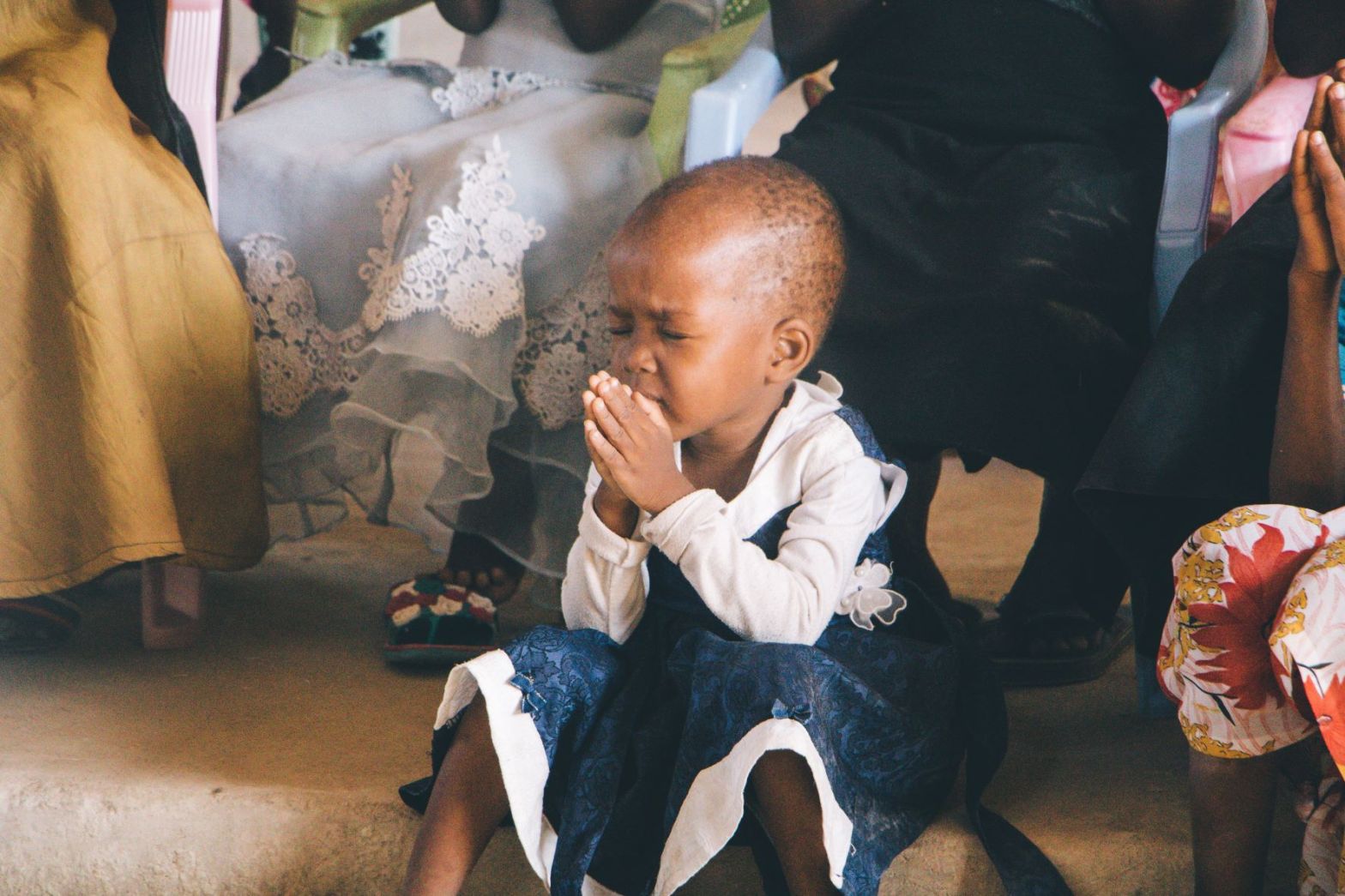
Prayer is a tool that allows people to talk to God. There are many ways to pray, some of which include more traditional rituals, like the Rosary or reading the scriptures. While these may be suitable types of prayer, for people who are new to the Christian faith, these prayers would make more likely to fail to get their attention. For kids, these types of prayers take a significant amount of time and practice to fully get right. As such, it is essential to teach kids the value of prayer. 

In The Song of Solomon the Snail,  a book by Caroleann Rice, the titular character meets Dot, a ladybug who has a lot of children. These kids have been giving their mom lots and lots of trouble. Some of them have come to be very, very unruly. Still, there are others who have become too much to handle. To help Dot, Solomon tries to teach them the value of prayer and patience. Suddenly, some of them have begun to calm down. This makes Dot very thankful, and she and Solomon become great friends.

Like in the book, prayers are the only way for Catholics to talk to God. It is important to teach this “way of communication” at a younger age. It is advisable for Catholic kids to build a good and lasting rapport with God so that their faith becomes a stronger one.

Spending Time with God

Bonding is the main form by which we build our relationships with other people. As such, prayer, which can also be seen as “bonding” with God, helps our relationship with him. When kids are taught to pray at an earlier age, they are given a chance to have a stronger relationship. At a younger age, children are purer and more honest with their feelings. As such, this allows for a deeper covenant with God. Kids who start to pray at an early age become the most devoted Catholics in the future.

Teaching Kids to Pray

At a much younger age, kids are most impressionable. As such, it is easier for them to learn different things. So how should one start to prepare kids in learning prayer? Well, one could begin by showing kids how to pray. Doing the ritual of the Sign of the Cross and praying before and after meals as a way to thank God for’s bounty that has blessed the tables are some of the most consistent and most straightforward forms of prayers. Because of that, they are good prayers for kids to start with. 

 A Time to Meditate

Kids can have a very hyperactive minds and even more hyperactive minds. It is not a bad thing, but always having a mind that zooms and never stops can be pretty tiring. Not to mention, it could have adverse effects in the long run. Prayer can help mitigate that. As prayer is a time to talk to God, those in prayer are able to contemplate and meditate. For kids, this can mean the time to rest their minds. Kids can also reflect because of mediation. This reflection is also a chance for growth. Children will develop their mental fortitude better if given the opportunity to meditate and rest their minds from time to time.

Granting Courage

Kids can be easily scared, depending on the situation. Even the bravest kids can have the most surprising fears. Prayer can help mitigate that fear. By letting kids understand that prayer is also communicating to God, they begin to realize that God is always with them in prayer. As such, prayer in the darkest of times can bring them courage. This courage will give the child the willpower to face anything or any problem.

Conclusion

So, in conclusion, prayer is a very powerful tool. Not only does it help adults, but it can also bring nothing but benefits the children. It is essential to teach children the value of prayer at an earlier time. That way, their faith in God will have a stronger foundation. This will make them good and upstanding Christians. Prayer can also give kids time to meditate and rest their weary minds from all the restless thoughts they receive. Lastly, prayer can provide children with hope and courage in their times of fear. Prayer, therefore, has nothing but good things to give to kids.

Sacraments of the Holy Church: Holy Orders

In the Roman Catholic Church, there is a belief that Jesus Christ, Son of God, instituted and entrusted seven holy sacraments. These Sacraments are rituals and rites that are viewed as the way God the Father channels his grace for believers in the proper disposition. These Seven Sacraments are one of the fundamental beliefs in the Roman Catholic Religion and are taught in early Catechism. The Seven Sacraments are taught to younger Catholics at an earlier time so that they are able to understand their greater significance to the whole religion. These sacraments are divided into three categories: as sacraments of initiation (of becoming part of the church), sacraments of healing (from sin), and the sacraments of service. The Seven Sacraments consist of Baptism, Confirmation, and the Holy Eucharist for the sacrament of initiation. The sacraments of healing consist of Holy Confession or Penance and the Anointing of the Sick. Lastly, the Sacraments of Service include the Holy Orders and Holy Matrimony.

All members of the Holy Catholic Church starts are welcomed through the right of Baptism and then confirmed by the aptly named sacrament of Confirmation. However, if somebody wants to serve the Holy Church, then they must be ordained as a priest through the Holy Order Sacrament. Entering the priesthood is not an easy undertaking. It is a vocation, and somebody who wants to enter into it must be dedicated. Education is also needed to become a priest, and those who wish to become priests enter a seminary. These seminarians are required to study many things, from philosophy to scripture and even theology. As such, they will need study materials like the Catholic Priesthood by Bevil Bramwell. Even then, when a seminarian finishes his studies, he will have to serve as a deacon. Roughly speaking, it takes about five years after graduating from the seminary before someone is ordained as a priest.

The Sacrament of the Holy Orders

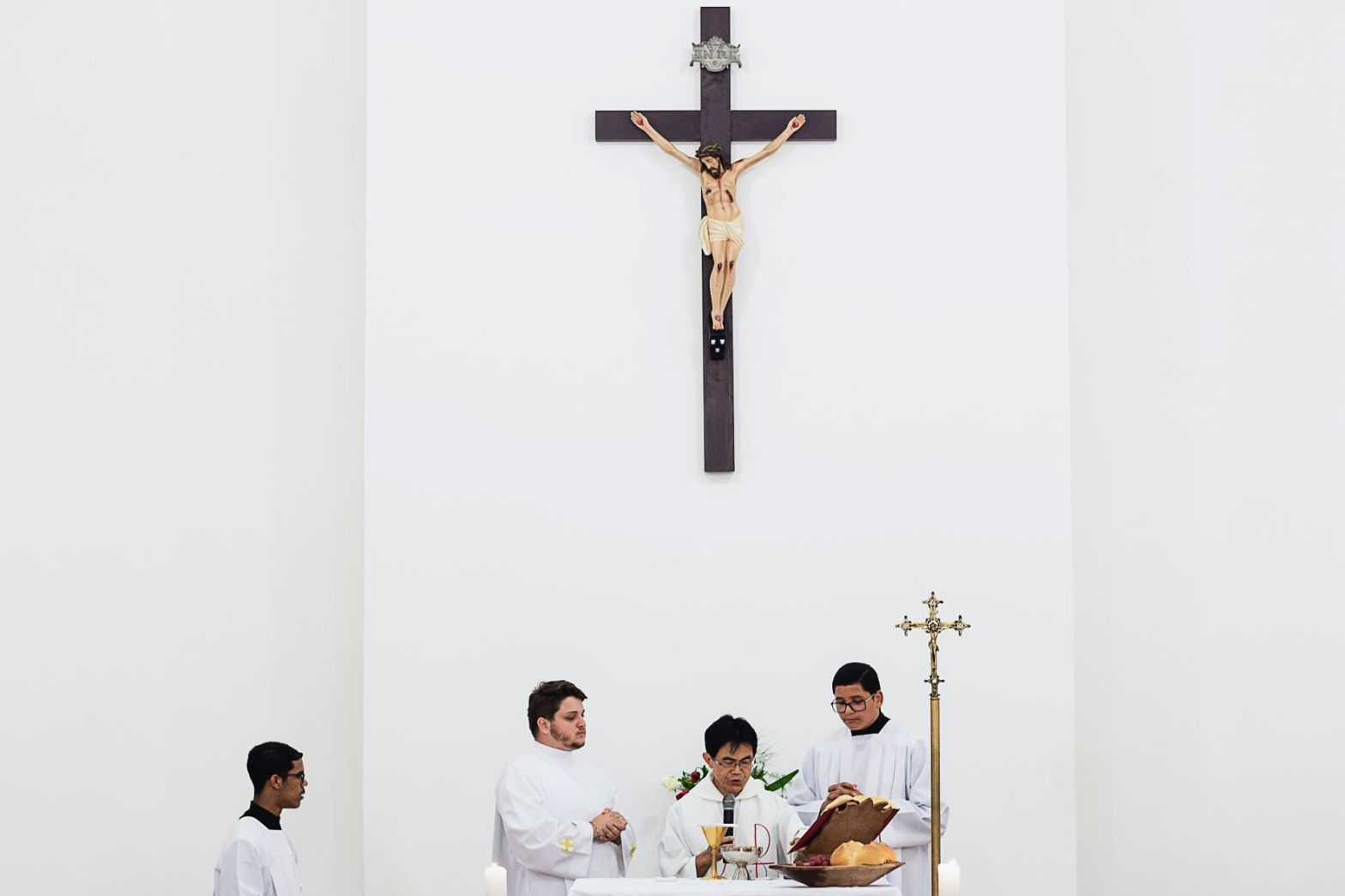
The Sacrament of the Holy Orders is basically the vow by which a Catholic man vows to become a leader of other Catholics. Priests cannot ordain other priests. The Holy Orders is a sacrament that can only be ministered by a bishop, the highest rank a priest can attain in the Holy Catholic Church. When a deacon becomes a priest, he is granted the power to administer some sacraments. A newly ordained priest is able to perform the Rite of Mass or the Rite of the Holy Eucharist. He is also able to perform baptisms, minister marriages, hear confessions and give absolutions, as well as to anoint those who are dying. Basically, the only sacrament a priest cannot minister is to ordain other priests. Though a priest may witness or preside over the sacrament of Holy Matrimony, he is not allowed to receive it as Roman Catholic Priests practice a vow of celibacy. This vow does not bar and prevent widowed or formerly married men from becoming priests.

The Rite of Ordination

The rite or ceremony of the priesthood is among the oldest that is practiced in the Catholic Church. Ordination of priests usually happens during the Holy Mass. It begins after the reading of the gospel. A deacon calls forward the priest candidates and presents them to the assembly. They are then interrogated. These priests then promise to perform diligently the duties of priesthood. They are also told to respect and obey their ordinary (a bishop or religious superior).

The candidates then lay down or prostrate before the altar as a sign of humility and supplication. Meanwhile, those present in the ceremony kneel and pray to help the priest candidates by singing the Litany of the Saints. The most essential act in the ordination then happens after. The bishop ordaining the priests lays his hands on the candidates. Other priests will follow this laying of hands after the bishop. Then, the bishops offered a consecratory prayer to the priests and offered to God. This is very important because it is believed that the Holy Spirit goes down from heaven and blesses all those who are present. After this, the deacon is officially ordained as a priest.

The conclusion of the rite of the newly ordained priest will vary depending on each country. In Spain, people approach the new priest to kiss their hand, while in Italy and Germany, the faithful approach the newly ordained priest to receive their blessing.

A PASSION FOR LITERATURE WRITING

Literature has different genres. Each one of us has our preference when it comes to reading one. Try considering short stories and poems.

What is a short story?

A short story is fictional writing that can range from a thousand to more than a thousand words. Unlike a novel, the reader should be able to read a short story within a short period. Because the length of a short story is faster than a novel, it usually has one main character and focuses on one plot, setting, and central theme. In his essay “The Philosophy of Composition,” Edgar Allan Poe states that a short story should be read in one sitting, anywhere from a half-hour or two hours. A short story has a beginning, middle, and a memorable end, and it usually contains fewer settings and characters. These are some of the elements of short stories which lead to a compelling narrative. Narratives can also account for imaginary events that follow a plot structure, including exposition or introduction, rising action, climax, falling action, and resolution.

Why do we write short stories?

The answer is simple. Short stories are practice, and almost all of the best writers started out writing short stories. Please think of some of the most famous writers today. When their careers first began, they probably started off writing short stories. They didn’t become favorite authors overnight; nobody has ever done it.

On the other hand, some poets think that poetry expresses emotions and that rules do not matter. Others suggest that poetry is all about the rhythm and regulations that must be followed. Thus, the perfect mix to define poetry is somewhere in between. 

According to E.E. Cummings, poetry is purely defined by the poem’s feelings, and syntax plays no role. This is evident when he writes, “for life’s not a paragraph And death I think is no parenthesis.” While poetry creates and must express feelings of “imaginary gardens with real toads in them,” poetry cannot be defined by these standards alone. After all, without specific rules to define poetry, any expression of emotion can be defined as poetry. 

Below are the tips on how to write a poem:

  1. Conceptualize your starting point. Your starting point can be a phrase or a line you want to work into your poem. It might be a picture in your head, or it can even be a complicated feeling you want to render with precision.
  2. Choose the form and style of your poem. Take some time to think about style and shape. The structure of a poem often carries a lot of meaning beyond the structural “rules” that it offers the writer.
  3. Read for inspiration. A poem isn’t a historical novel or a nonfiction book. Thus, you don’t have to accumulate reams of research to write a good one. A little bit of outside reading can rule out writer’s block and keep you inspired throughout the writing process.
  4. Consider writing for an audience of one, which is you. Even with preparation, the pressure of actually producing verse can still awaken your inner fear of poetry. Some suggest writing for yourself, not for an external audience, can help you cope with your fear to keep the anxiety away.
  5. Read your poem loudly. A good poem doesn’t have to be pretty. It should, however, come alive on the page with a consciously crafted rhythm, whether discordant or hymn-like. To achieve that, read your poem aloud — at first, line by line, and then all together, as a complete text.
  6. Refresh your mind by taking a break. While it’s inspiring to complete a draft of your poem, it’s always advisable to take a break first. You don’t have to turn away from writing if you don’t want to. 
  7. Have fun revising your poem. Even if you write in a well-established form, poetry is about experimenting with both written and spoken language. Some authors emphasize that changing a poem is thus an open-ended process that requires patience — and a sense of play. 

It is considered a significant venture when a single author does these two particular literary genres, short stories and poetry. Writers like Brian Clements could write a book about short stories and poems. His true passion is writing.

Design a site like this with WordPress.com
Get started