
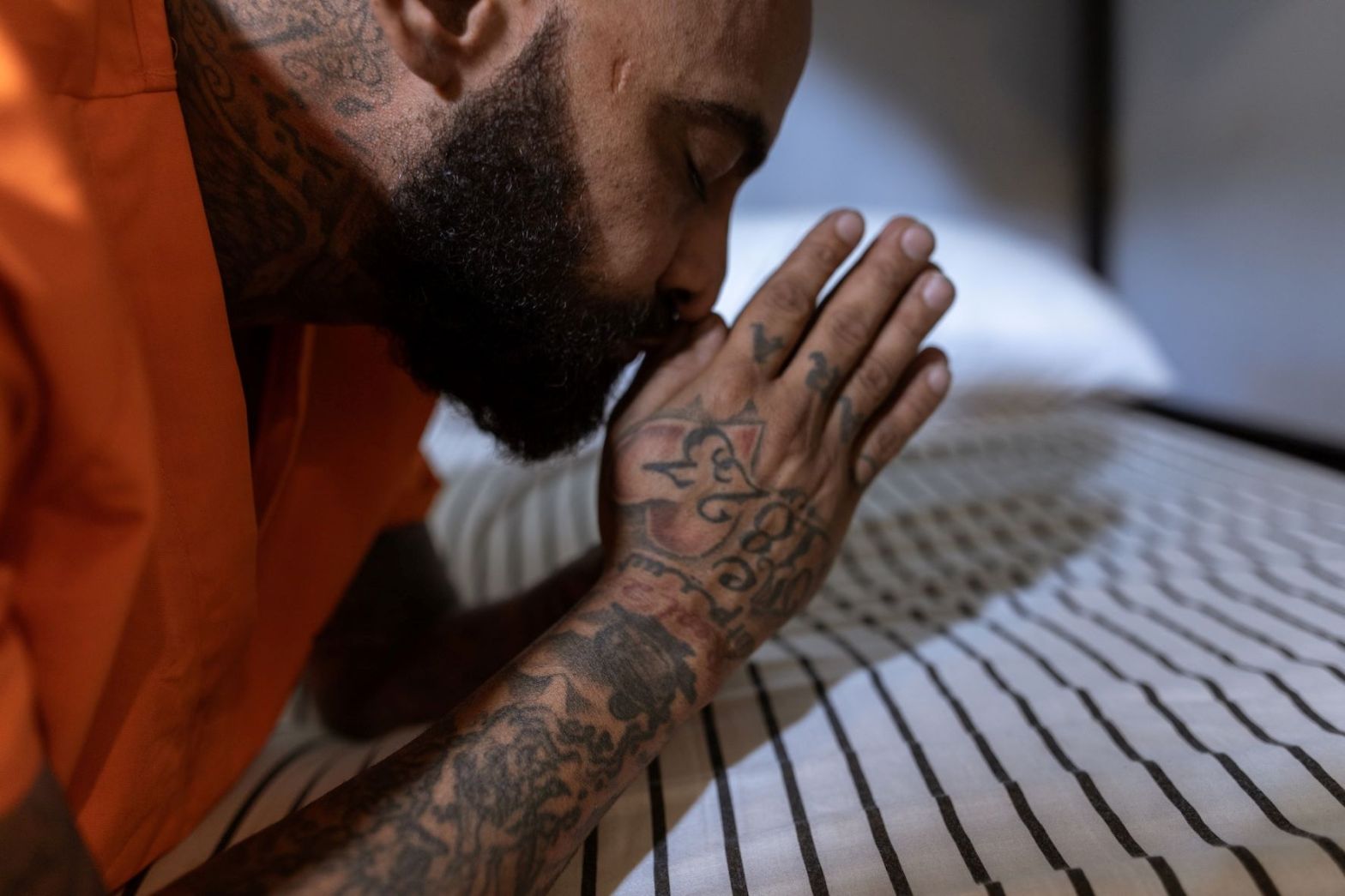
Photo by RODNAE Productions
Real Prison, Real Freedom is the life of Rickie Smith, who was known as the worst Texan inmate. When it looked like violence would follow him forever, he encountered the Gospel of Jesus Christ.
Prison, for most, is simply a distant place where criminals are kept and justice is dealt with—where good people are scarce, and violence is the law of most interactions. Most people will never see the inside of a prison; if they do see it, it will only be through the safety of a screen in the comfort of their living room.
But for many people in the correctional systems, prison is a place they will have to know intimately, and for some, prison becomes the only home they will ever know.
The United States has about 200 million people inside its prisons and jails. This mass incarceration gestures to a severe problem with criminal activity and how society defines what a crime is. Sometimes hopelessness and despair are the only options for those in the system.
Prison sentences differ from state to state, and treatment changes from facility to facility. This inconsistency means that the experiences that individual prisoners have can vary greatly. In US prisons, specifically, there is tension between the correctional officers and the inmates.
Rosser McDonald’s Real Prison, Real Freedom, recounts the life of one Rickie Smith.
Although this elaborate narrative compiles the themes of abuse and addiction, racism, mental illness, marriage, and violence, Real Prison, Real Freedom, at its roots, is a book of the transformative power of redemption, faith, and Christ.
The Arduous Life of Rickie Smith
Rickie Smith was brought up in a fragile household with abusive parents. Incessantly, there would be aggressive confrontations between him and his father. This constant domestic scramble would continue throughout his teenage years, where Rickie would sink into other forms of impropriety and sinfulness—sexual immorality, substance abuse, and physical disputes.
As a young adult, Rickie would become quite intimate with the justice system, crowding city and country jails for many crimes and misdemeanors—theft, drug and illegal firearms possession, and battery.
In the early 1980s, these misdeeds would result in Rickie being detained and imprisoned, after being charged with controlled substance possession and for breaking the window of a police car after an altercation. If he had only stayed put, Rickie would’ve been released after ten years—but inside prison, he got acquainted with the Aryan Brotherhood, a group of white supremacists, acquiring notoriety for being violent.
This persistent violent streak would push Rickie to more restricted confinement. After the attempted murder of a fellow inmate, his previous ten-year sentence would become a hundred-years one, virtually a life sentence.
The Transformative Power of Faith
Rickie would spend decades languishing in the carceral system, sad and desperate. Within those years, a church-sponsored ministry would attempt to rehabilitate him, but it was only after reaching a shallow point that Rickie would become more responsive. It was a verse from Matthew: “Come to me, all you who are weary and burdened, and I will give you rest” that would ultimately persuade him to try and accept Christ into his heart.
In the months after his reconciliation with the ministry, Rickie would be baptized and become quite the positive influence on other inmates, who saw he had changed and endeavored to follow him.
Rickie’s story shows how transformative the light of Christ is; as McDonald would say, “[Rickie] went from being one of the worst [inmates] to being one of the best in the Texas prison system.”
For people feeling as if they’re in a pit, Christ is waiting for them to look up and see the hand He has reached out.
About Rosser McDonald
After leaving his career measuring and recording earthquakes, Rosser McDonald pursued a job in mass communications, specifically radio, where he found unexpected success, eventually becoming a news reporter for television in Oklahoma and then Texas.
During his years as a reporter in Dallas, McDonald found a calling as a documentary filmmaker, winning several Telly Awards and receiving an Emmy nomination twice. His much-lauded documentary Set Free let him develop relationships with hardened inmates, which allowed him to meet Rickie Smith, the primary subject of Real Prison, Real Freedom.
Now retired, McDonald enjoys life with his wife, Glenda, a musician but still communicates with his acquaintances in prison and corresponds with other filmmakers to produce Christian-themed films.

