
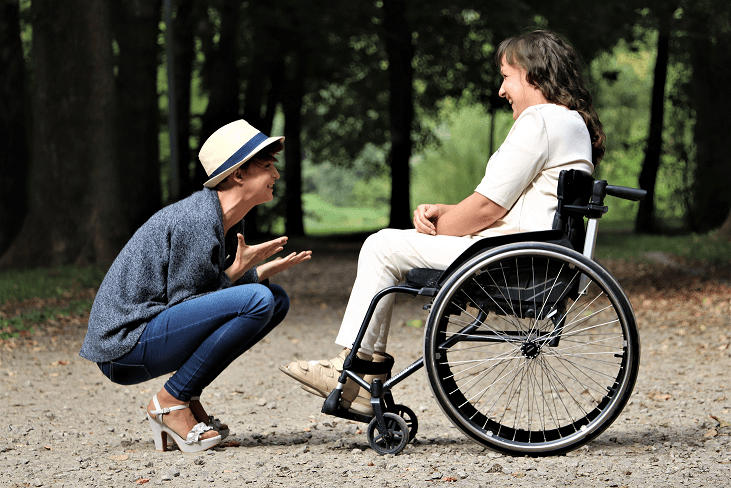
Photo by Judita Tamošiūnaitė: https://www.pexels.com/photo/woman-on-black-folding-wheelchair-2026764/
Stroke recovery is unique to each patient. A lot of effort goes into caring for stroke patients. Still, all these endeavors become rewarding once caregivers begin to see a positive result from their actions and their patients begin to recover and regain their life.
Caring for a stroke patient can be challenging for caregivers, especially if the patient is a loved one or a family member. There is that cloud of worry hovering up ahead, wondering how long before the patient recovers and what their anticipated needs are in the coming months or years ahead.
One of the caregiving goals is to help loved ones get back on track as quickly as possible. In the case of stroke recovery, the recovery process for a patient and their caregivers isn’t smooth sailing at all. Stroke recovery can be daunting and challenging. A high level of the physical, mental, and emotional process goes into providing care that can become overwhelming at one point for the caregiver.
But how can you say no to taking care of a stroke recovery patient if it’s a family member?
Caregiving is one of the most taxing jobs there is, but also one of the noblest professions. Eleanor Gaccetta, in her book One Caregiver’s Journey, effectively depicted the realities that caregivers faced in their carer roles and responsibilities. In this touching memoir, Eleanor shared her experience providing care for her mother 24/7 for almost ten years until her mother’s death at the age of 102.
The book brought to light the real-life behind-the-scene encounters caregivers had to deal with in their line of work. Caregiving is not something for the faint-hearted but for the strong-willed and passionate individuals willing to go that extra mile to alleviate the condition and situation of their patients or loved ones. Regardless of the sickness or disease, all patients requiring caregiving assistance should have the same level of support and care.
And stroke recovery patients should be treated no differently.
Stroke in Overview
Not unless you’ve intentionally studied to become a neurologist, you’ll undoubtedly feel bewildered by all the complexities that come with the stroke disease.
The Centers for Disease Control and Prevention reported stroke as the leading cause of death in the United States and the leading cause of disability for adults. Just looking at the statistics, one could tell just how life-threatening and severe stroke disease is. It can get unsettling for both the one providing care and the patient if they’re unaware of the health implications of stroke, including the necessary treatment or type of care.
A stroke occurs when the brain tissue is not getting enough nutrients and oxygen because of blocked clots, bursts, or ruptures. If there’s no oxygen coming into that part of the brain, the brain cells die, which is then outwardly depicted by a sudden weakness on one side of the body, depending on the brain’s location.
In most cases, complications include difficulties in talking or swallowing, loss of muscle movement or paralysis, memory loss, mental health problems, etc.
Caring for a Stroke Survivor
A lot could be going in your head right now if you are caring for a stroke survivor. The experience could be daunting, even intimidating at times, that you’re rendered almost to the point of being helpless.
Take a breather and assess the situation first. Yes, it is a big responsibility, but not an impossible situation to conquer and get under control.
Here are some valuable suggestions to get you started on your role as a caregiver to a stroke-recovering patient, and that could also help you balance out your life in the process.
Arm Yourself with Stroke Education
One of the missteps in caregiving is not getting enough knowledge about the sickness or the disease before diving into work. The best practice is to get enough knowledge and awareness, in this case, about stroke. All kinds of illnesses or conditions have their specific implications and treatment.
Before putting on the caregiving hat, the caregiver should study and learn more about the disease, its causes, signs, symptoms, prognosis, treatment, and first aid management. They should also learn about lifestyle and medical risk factors, especially concerning the patient.
Review the patient’s background, such as the type of stroke complication, the patient’s lifestyle, the doctor’s ordered medication, therapy, treatment, and so on.
Preventing Risk of Stroke Recurrence
Stroke survivors have the highest risk of having another bout with stroke. Multiple recurring strokes must be avoided at all costs since the injury to the brain could get more severe and lead to long-lasting problems that would make a recovery almost impossible.
It is essential that when caring for stroke patients, treatment should always include a combination of medication and lifestyle changes. Lifestyle changes could include weight management, nutritional diet, quitting smoking and drinking alcohol, exercising, etc.
Caregivers could also assist their patients by constantly monitoring their blood pressure and ensuring their blood pressure level is normal and under control. They could also prepare the proper meals for their patients, such as foods that are low in sodium or fats.
House Modification
Caregivers should work with the family members to make the house hazard and risk-free for the stroke patient. Creating modifications such as grab or handle grip bars in focused areas, non-slip mats, ramps, lifting mechanisms, and so on should be encouraged to make it easy for the patient and the caregiver to be mobile.
Emergency Contact Numbers Readily Accessible
Caregivers should also ensure that they have emergency contact numbers with them and on hand all the time. The contact numbers should include the numbers of the neurologists or physicians responsible for the patient, family members, police department, fire station, and the number of 911 or the EMRs should be on speed dial.
Monitor Behavioral Changes
Behavioral changes are not uncommon in stroke patients. This is often called post-stroke depression, caused by biochemical changes to the brain when the brain is injured. So if your patient becomes sad, anxious, depressed, irritable, moody, or even has suicidal tendencies, despite normal psychological reactions to stroke, the caregiver must address these symptoms before they worsen. Social support is essential during this recovery phase since studies suggest that mental health problems often go hand in hand with a lack of support. You could also consult a healthcare specialist or a psychologist on the best ways to address these symptoms.
Respite Care
This is the much-needed time of TLC (tender loving care) for caregivers. They’re human, after all. Respite care is short-term relief provided for primary caregivers. The period for respite care can go on for several days or even weeks. During this time, there will be a temporary replacement filling in the role of the caregiver, while the primary caregiver takes this time to enjoy that much-needed break or “respite” to attend to their personal needs. This is when caregivers care for their physical, mental, and emotional health needs.
Caregiving for stroke recovering patients is an ongoing learning process. It’s always helpful to have a strong network of support and connection to maximize and speed up the patient’s recovery process. Although stroke recovery is not a one-size-fits-all process, still, it is not difficult to achieve. And for caregivers, it becomes a worthwhile endeavor once they see their patients or loved ones on that transition to gaining back their life and becoming successful stroke survivors.
 The Damsel’s Files