
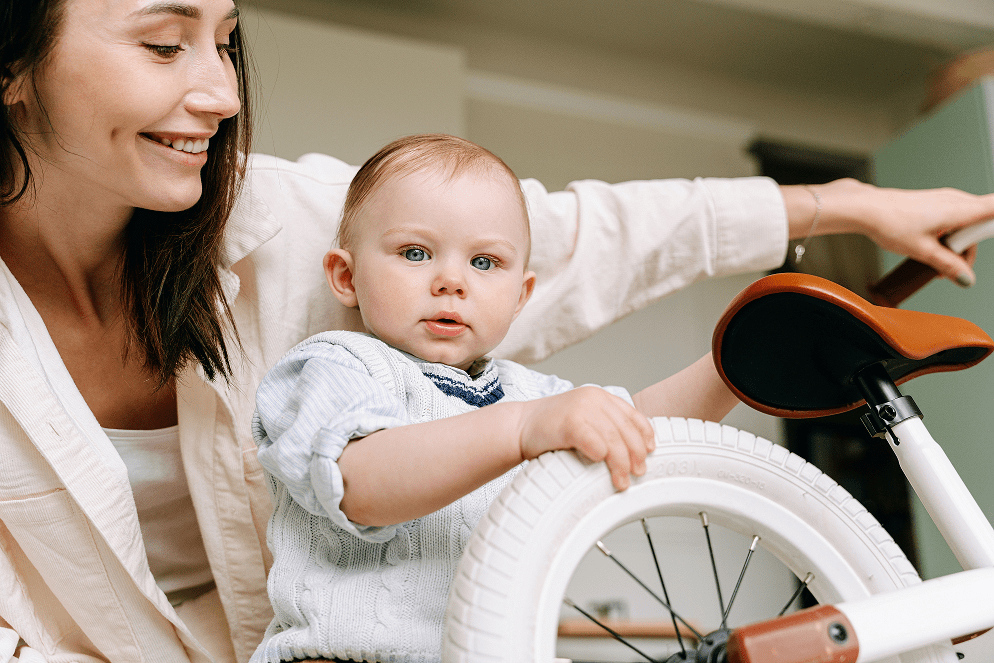
Photo by Ivan Samkov: https://www.pexels.com/photo/a-smiling-woman-looking-at-her-son-near-the-bicycle-8504323/
The relationship between a parent and a child should never be taken for granted. How a child is brought up by their parents will determine the kind of adults they’ll become once they join the world of grown-ups.
There’s nothing more important in this world for parents than seeing their kids grow up to be happy and fulfilled individuals. Parenthood is not often a smooth road to travel on; it has its bumps and sharp curves when raising a child. It’s not easy bringing a child into this world, and it’s no walk in the park raising them. Despite the challenges, being a parent remains one of the most valuable roles in life.
Early parent-child communication is encouraged if parents want their children to grow into the kind of adults they want them to become. Jo Ann Gramlich’s interactive book Talk, Play, and Read with Me Mommy was designed to stimulate interaction between parents and their children. The initial stages of communication in Gramlich’s book focused on interactive literature. The book highlights the significance of a child’s language development at an early age, which could be achieved by early intervention through media explicitly intended for their age group.
Where does language fit in a parent-child relationship?
Language is an essential component in any successful social interaction. Language is vital for building that much sought-after and ideal parent-child relationship. The start of any successful relationship between a parent and a child begins with an effective communication process. For communication to be considered successful, the parent should be able to make out what their child is trying to communicate, to express, and should be able to effectively interpret any signs that their child is trying to make.
Many serious consequences can come from failed communication between a child and their parents. For one thing, failed communication could lead to academic difficulties. If a child perceives that their parents aren’t able to understand them, they will develop the thinking that they (the child) are not good communicator. Their studies get affected since they become unsure how to express themselves to their teachers or else how to express their thoughts or opinions when they’re asked to explain something. Other serious issues that could arise are anxiety disorders or behavioral problems.
Developing a Positive Parent-Child Communication
Knowing the importance of positive parent-child communication is the first step toward successful parenting. The next thing to do is the how-tos for the process. Here are some tips to help boost that communication process and strengthen the parent-child relationship.
Allot Playtime Together
Playing helps improve a child’s cognitive, social, physical, and emotional well-being. Being free and having fun could do wonders to a child’s self-esteem. Playtime could help boost a child’s confidence, resilience, social interaction skills, independence, curiosity, and coping skills.
Parents should spend playtime together with their kids. Parents must be there while their child is developing their psychosocial skills to boost their self-esteem further, making them feel more confident and assured that their parents are readily there whenever they need them.
Listening and Empathizing
A parent should always be ready to listen and empathize with their kids. This process can aid parents in effectively translating and interpreting what their child wants to send; for a parent to sit down and listen while their kids rant, rave, or cry is enough for a child to feel secure. Also, the act teaches a child to become compassionate individuals when they grow up to become adults.
Develop a Ritual
Creating rituals with kids does a world of wonder for their feeling of security. It could be something simple as having a movie time together on a specific day of the week, a scheduled reading time, or any activity date so long as it’s done consistently. It could even be a planned weekend of cooking or baking. Think of it as a personalized version of a holiday specifically made for the child to have a personal parent-child bonding moment.
Consistently Show Love and Affection
Never fail to show and make children feel that they’re loved all the time – no matter what! Even if the child already knows they’re loved, expressing it outwardly and consistently will help develop individuals who will become equally loving, sincere, and compassionate later on. And, yes, this will also teach kids the value of self-care and self-love.
There is no “one-size fits” rule regarding bringing up a child. There’s no strict roadmap to follow to achieve that successful parent-child relationship. To make everything work, the only thing to keep in mind is to ensure that good communication exists between a parent and their child. Good communication produces a happy child. And when a child is happy, the turn-out is also a happy parent.
 The Damsel’s Files