
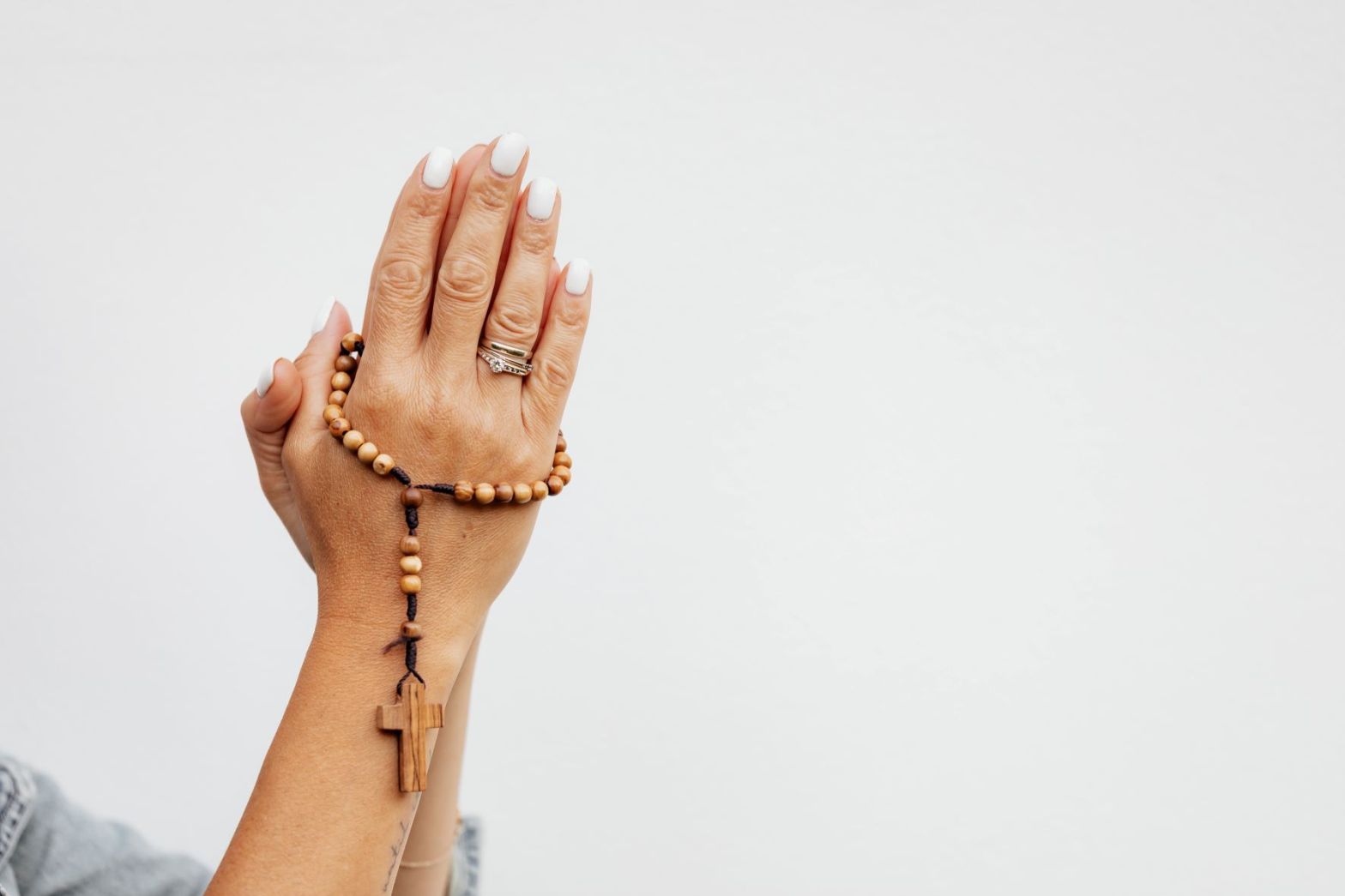
A prayer is defined as an act that aims to activate a rapport with an object of worship through deliberate communication. In other words, prayer is how a believer of a religion or faith communicates to a deity or deified ancestor. For Christians and Catholics, prayer basically means the time to talk to God.
There are many reasons why someone prays. One of these reasons is to honor or give respect to God. Another is to give thanks for the blessings He has given to the world. Prayer can also be said in order to ask for forgiveness. All in all, prayer is a tool by the faithful that allows them to deepen their bond with God, as evidenced by Judith Martin Alford’s story book about relationship with God.
The book, entitled “The Hands of God,” shows how people who all have a profound experience with the Holy Father say their thanks through different prayers as they experience God’s powerful intervention in their lives. Though their experiences with God are different, the people who share their authentic life stories all have one thing in common: they are fervent and frequent prayers, if not before, then after their life-changing experiences.
Unlike most religions, prayer in the Catholic and Christian sense is a bit more democratized than rigid. The most basic thing to start a prayer is just the willingness to take time and talk to God. They can talk to Him, ask for His forgiveness, or even thank him for all the blessings He has given the world. There is not much ritual needed.
However, that is not to say that the Roman Catholic, and by extension, the Christian Faith, does not have a tradition in prayers. Nothing can be more wrong. Christianity has different kinds of specific prayers for different types of occasions or situations. Most of them are intercessional prayers or prayers that ask the various saints or Mother Mary herself to intercede on their behalf.
Among the more well-known prayers in the Catholic faith include:
The Lord’s Prayer
Among the prayers in the Christian faith is the Lord’s prayer. It is a prayer that Jesus Christ himself taught his disciples when they asked him about how to pray. The Lord’s prayer appears twice in the Holy Bible. In the Gospel of Matthew, Jesus teaches his disciples the prayer during the Sermon on the Mount, and the next is in the Gospel of Luke, where Jesus taught it when one of the disciples asked Him to teach them to pray “as John taught his disciples.” For many, The Lord’s Prayer is the most complete out of all of them.
The Sign of the Cross
The Sign of the Cross is a citation and a ritual blessing recited by the Christian faithful. The sign of the cross is the most common prayer in the Catholic tradition as it is often recited before any other prayer. The Sign of the Cross is usually done with the right hand tracing a cross across the body, starting from the forehead down to the middle of the chest, then across the shoulder, from left to right, as the formula of the Holy Trinity (In the name of the Father, the Son, and the Holy Spirit. Amen.) is recited. Second-century Apostolic Tradition dictates that the Sign of the Cross can be used during the minor exorcism of baptism, during ablutions before praying at fixed prayer times, and in times of temptation.
The Holy Rosary
The Holy Rosary refers to both the knots or beads used to count the component prayers that comprise the prayer and the prayer itself. It comes from the Latin: rosarium meaning “crown of roses” or “garland of roses.” The rosary is arranged in sets of ten Hail Marys (called a decade) and surrounded by a Lord’s Prayer at the beginning and a Glory Be at the end. The Fatima prayer of “O my Jesus” is also often said after the Glory Be by some Catholics. A rosary also has five decades, which corresponds to a mystery. There are four mysteries in total, with three original and one more added to by Pope John Paul II. Each of these mysteries is a meditation on the life and death of Jesus Christ, starting from the Annunciation until the Ascension. These mysteries are Joyful, Luminous, Sorrowful, and Luminous Mysteries. The Holy Rosary is notable in that it is also a prayer representing the Catholic emphasis on “participation in the life of Mary, whose focus was Christ,” and the Mariological theme “to Christ through Mary.”
 The Damsel’s Files